
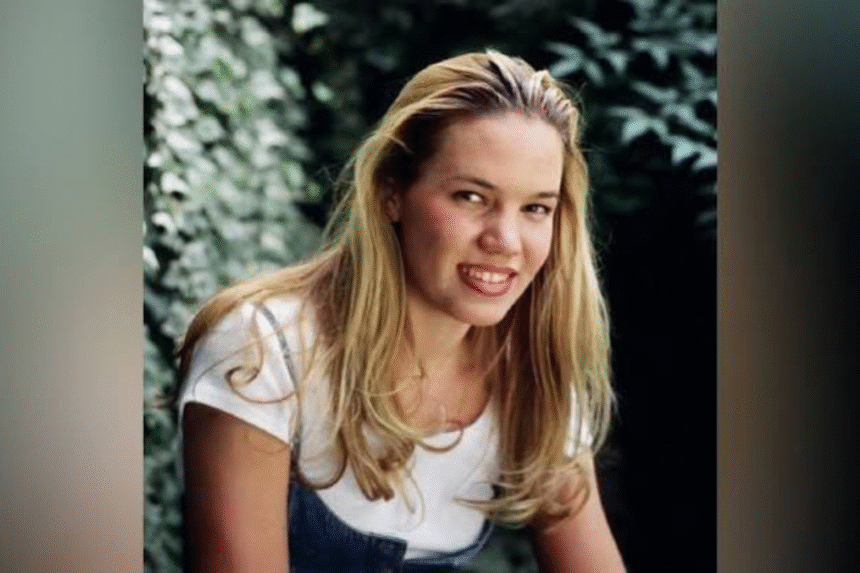
In May 1996, Cal Poly freshman Kristin Smart disappeared from her San Luis Obispo campus during Memorial Day weekend, launching a 25-year investigation into what happened to her.
The Night Kristin Disappeared
On Friday, May 24, 1996, Kristin Smart left her parents a voicemail saying she had good news and would call them again on Sunday. That night, she asked her close friend Margarita Campos to go out with her in search of a party.
Because it was Memorial Day weekend, fewer parties than usual were happening on and around campus. Kristin had recently lost her dorm key, so the two relied on Margarita’s key to get back into their building. Kristin also left without her identification, her wallet, and any money, and she did not drive herself anywhere that night.
The pair joined a group of other young women and caught a ride with an acquaintance who drove them to a house party. Kristin found the gathering unremarkable and had only one beer there before the group continued searching for something livelier.
After driving around without finding another party, Kristin and Margarita got out to walk through a nearby neighborhood. Margarita grew tired and wanted to turn back, but Kristin wanted to keep looking.
The two parted ways, and Margarita handed Kristin her dorm key, which Kristin tucked into her sock before continuing on alone.
Around 10 p.m., a short distance from where she left Margarita, Kristin came across an unofficial birthday party at a house associated with the Sigma Chi fraternity, hosted for a student named Ryan Fell.
About twenty guests were in attendance, and several noted that Kristin, dressed in vinyl shorts, a crop top, and red sneakers, drew attention from many of the young men there.
At one point, she introduced herself to a student named Trevor Boelter as “Roxy” and pulled him aside to say she was actually interested in a basketball player also at the party, who later showed little interest in her. Kristin drank considerably more that night than she typically did.
The party ended around 2 a.m. As two attendees, Tim Davis and Cheryl Anderson, walked home, they found Kristin lying on a lawn, too intoxicated to stand on her own. They helped her up and decided to walk her back toward her dormitory.
Along the way, a nineteen-year-old student named Paul Flores joined the group and put his arm around Kristin’s waist, later explaining that she was cold. The dormitories were roughly half a mile away.
Tim left first, since his car was parked nearby, and Cheryl broke off next, heading toward her own dorm and leaving Paul to continue walking Kristin the rest of the way.
Paul later stated that he walked Kristin close to his own dorm, watched her cross the remaining distance to hers, and then went inside for the night. Kristin had planned to spend that night in Margarita’s room, but she never arrived.
A Delayed Investigation
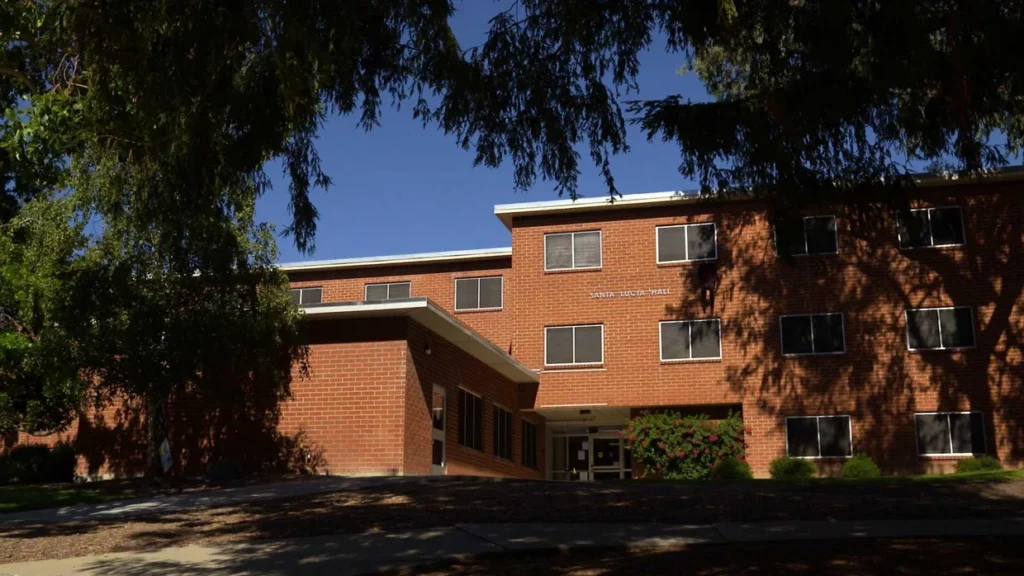
When Kristin’s roommate returned from being away for the weekend, she found Kristin’s backpack on the bed but no sign of Kristin herself. By Sunday night, with still no word from her, friends began asking around campus, but no one had seen or heard from Kristin.
Her parents grew concerned when she failed to call as promised, though they initially assumed the holiday weekend had simply delayed her.
On Monday, a group of Kristin’s friends decided to involve the authorities. One of them, Jennifer Phipps, contacted campus police, who declined to take a formal report and suggested Kristin had likely left for a spontaneous weekend trip, possibly to Hawaii, given her fondness for the islands.
A call to local police produced a similarly dismissive response. This was despite the fact that Kristin had left behind her identification, money, clothing, and schoolwork, taking nothing with her.
Campus police eventually contacted Kristin’s parents to ask whether she had returned home, a call that alarmed her mother, Denise. Officers reassured her that college students often took unannounced trips.
It was not until May 28 that police formally filed a missing person report, and the campus newspaper did not cover the story until May 31. By then, Kristin’s father, Stan, had already driven to San Luis Obispo to speak with investigators directly and to post missing flyers around campus.
Shortly afterward, the San Luis Obispo Police Department joined the campus police in investigating her disappearance.
A report filed by an officer on May 31 described Kristin as intoxicated and flirtatious that night and characterized her as not conforming to typical behavior, while noting the details were not meant to suggest she caused her own disappearance.
On June 20, an investigator told the campus newspaper there was no evidence of criminal activity and that the case was being treated as an adult missing under unusual circumstances.
On June 26, 1996, the investigation was formally transferred to the San Luis Obispo County Sheriff’s Department, which organized a large-scale search within three days involving more than 400 volunteers, helicopters, and cadaver dogs.
Suspicion Turns to Paul Flores
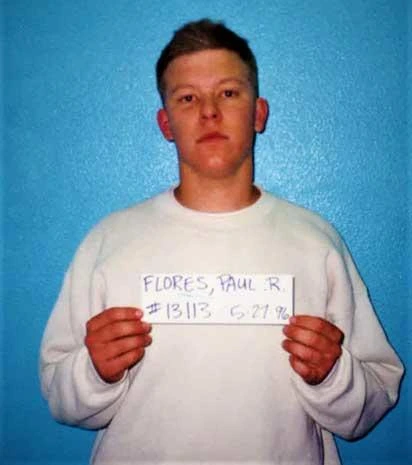
As investigators interviewed people who had been at the party, one individual repeatedly came up: Paul Flores. Tim Davis recalled hearing a loud crash during the party and looking over to see Kristin on the ground with Paul on top of her.
Trevor Boelter described Paul confronting him aggressively outside a bathroom after Kristin had spoken with him privately, then abruptly turning friendly once told nothing had happened.
Another student said Paul tried to kiss her twice that night despite being pushed away, and several other young women reported that Paul had groped or attempted to kiss them without consent throughout the evening.
Cheryl Anderson, who already knew Paul, said he repeatedly urged her to walk ahead of the group on their way home and tried to kiss her before she split off, both of which she refused.
When police interviewed Paul, he claimed he had ended up at the party by chance while walking to his sister’s house, but phone records showed he had called her earlier that evening, contradicting his account.
He also said he had not interacted with Kristin until the walk home, which conflicted with Tim Davis’s description of seeing the two of them together on the ground earlier in the night.
Investigators also observed that Paul had scratches on his hand, rug burns on his knees, and a black eye. He initially attributed the black eye to a pickup basketball game, but a friend who had played with him said Paul already had the injury beforehand and could not explain it at the time.
Paul later offered a different explanation, saying he had struck his eye on his truck’s steering wheel while installing a stereo system. Investigators did not photograph his injuries during questioning.
Around the same time, Paul was arrested for driving without a license, a parole violation, and was booked into custody on May 27, 1996, two days before police formally accepted Kristin’s missing person report.
During a later interview on June 19, Paul appeared anxious and said he needed to leave to clean up concrete at his mother’s house.
Investigators also learned of Paul’s history of aggressive behavior toward women, including a December 1995 incident in which he climbed the side of an apartment building to look into a window at night; police who responded simply told him to leave. Multiple women in that same building later reported repeated harassing calls from him.
Digging for Evidence
When cadaver dogs were brought into the Cal Poly dormitories, with their handlers unaware of any case details, four separate dogs alerted outside Paul’s dorm room, which he shared with a roommate named Derrick Tse.
By the time investigators searched the room, Paul had left for the summer and the space had already been cleaned. Even so, the dogs alerted on his mattress, and after the mattress and box spring were removed, they alerted again on the bare bed frame, as well as on a telephone and a trash can in the room.
When that trash can was later placed among several others in a hallway, the dogs still identified it. Derek recalled that Paul told him he had walked Kristin home that night and, when asked what happened to her, replied that she was at his house having lunch with his mother.
On July 22, 1996, investigators searched the home of Paul’s father, Ruben Flores, where Paul often stayed. The search was limited to a visual inspection, without cadaver dogs, a forensic team, or an examination of vehicles or Ruben’s avocado grove.
Investigators found newspaper clippings about Kristin’s disappearance in several rooms, including beneath both Ruben’s and Paul’s mattresses.
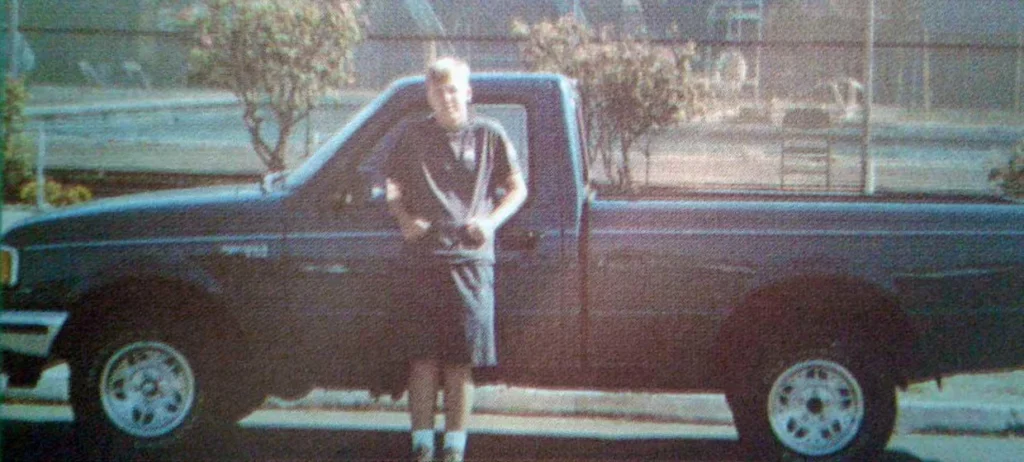
Ruben later gave inconsistent sworn statements about which family vehicles were in use that May, contradicting coworkers who confirmed Paul had driven one of them; both trucks were later disposed of, and the vehicle transferred to Paul was reported stolen shortly before a scheduled deposition.
That fall, after Paul attempted to enlist in the Navy, the Smart family filed a $40 million wrongful death lawsuit against him, preventing him from leaving the area; he was ultimately rejected from military service.
During sworn testimony in November 1997, Paul invoked his Fifth Amendment right in response to every question asked.
The civil lawsuit allowed investigators to gather new information through subpoenas. Tenants who later rented a separate house belonging to Paul’s mother, Susan Flores, testified that she had instructed them not to disturb an aluminum trash can outside the property, which Ruben collected the following day.
The tenants also began receiving mail from strangers urging the family to come forward, and one of them found a silver earring with a turquoise stone and a reddish stain near the driveway, which investigators later collected as evidence but subsequently lost.
In the backyard, the tenants found a layer of cement beneath a large planter box, later determined to have been added the same summer Kristin disappeared, alongside other construction work at the property that year.
A neighbor reported witnessing Paul and other men digging in that yard for several hours one night, pouring concrete, and burying an object that appeared to require two people to move; a garage was later built over that section of the yard.
Additional searches followed, including a nine-hour search of Susan’s property in 2000 using ground-penetrating radar, which produced inconclusive results without excavating the concrete.
In 2007, following a separate lawsuit the Flores family filed against the Smart family, another radar search was permitted, but investigators were barred from examining the planter area and the garage built over it.
Renewed Investigation and Arrests
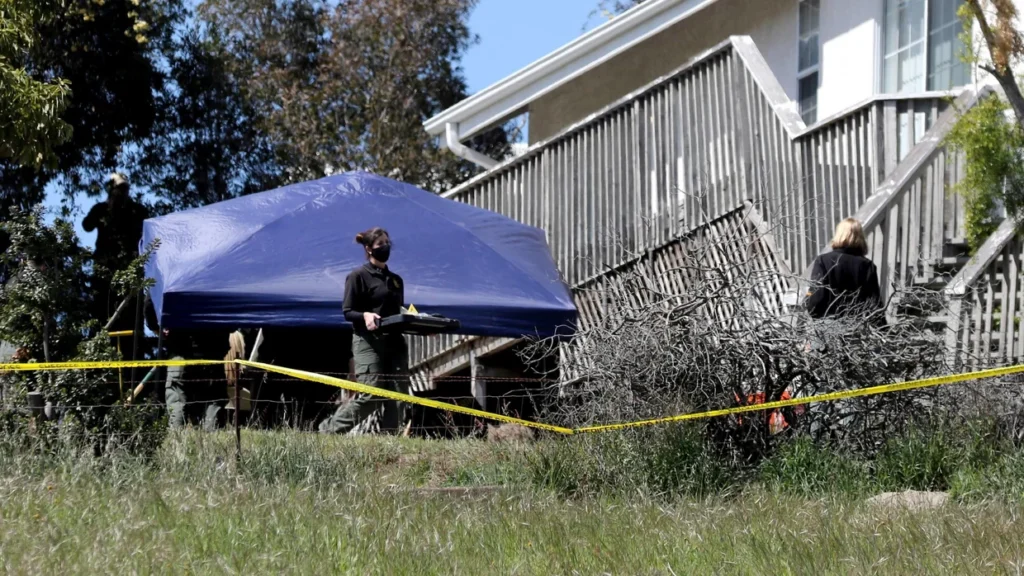
Kristin was legally declared dead in May 2002. In 2011, newly elected Sheriff Ian Parkinson ordered a complete review of the case’s evidence.
In September 2016, the sheriff’s department announced a new lead and conducted a four-day excavation around the Cal Poly campus using cadaver dogs and heavy equipment.
In 2019, musician Chris Lambert released the podcast “Your Own Backyard,” featuring extensive new interviews related to the case.
The renewed attention led investigators to obtain a court order to monitor Paul’s cell phone and to reinterview witnesses identified through the podcast, including an exchange student named Neil Van Est.
Van Est had told police years earlier that, while biking past a dormitory around 2 a.m. on the night Kristin disappeared, he saw a man and woman struggling inside through large windows; his description of their heights matched Paul and Kristin.
In January 2020, investigators recovered two vehicles previously owned by the Flores family. The following month, search warrants were executed at the homes of Paul, Ruben, Susan, and Paul’s sister in California and Washington, yielding items described as significant to the case.
In April 2020, new evidence led to a second search of Paul’s home, during which several electronic devices were collected and Paul was briefly taken into custody before being released.
In March 2021, investigators searched Ruben’s property again using cadaver dogs and ground-penetrating radar and collected a vehicle as evidence.
On April 13, 2021, Paul Flores, then forty-four, and Ruben Flores, then eighty, were arrested at their homes. Paul was charged with first-degree murder and held without bail, while Ruben was charged as an accessory and released on bail.
Investigators stated they believed Kristin died during an attempted sexual assault and that Ruben had helped conceal her remains, which biological evidence suggested had initially been located beneath his deck before possibly being moved.
Because a killing committed during a rape or attempted rape carries no statute of limitations, prosecutors were able to pursue murder charges despite the years that had passed. Both men pleaded not guilty on April 19, 2021.
Following the arrests, the Smart family filed a separate lawsuit against Ruben, alleging he had helped conceal Kristin’s body and later moved it along with Susan and her boyfriend after a 2020 search of his property.
The suit stated a confidential witness had come forward describing having seen the remains relocated. Since Sheriff Parkinson took over the case, investigators had executed forty-one search warrants, submitted dozens of older evidence samples for modern DNA testing, collected nearly two hundred new physical items, and conducted well over a hundred interviews.
The case also led to the Kristin Smart Campus Security Act, which took effect in 1999 and requires campus police to immediately notify local law enforcement of potential violent crimes or missing-person cases involving students.
Trial, Conviction, and Sentencing
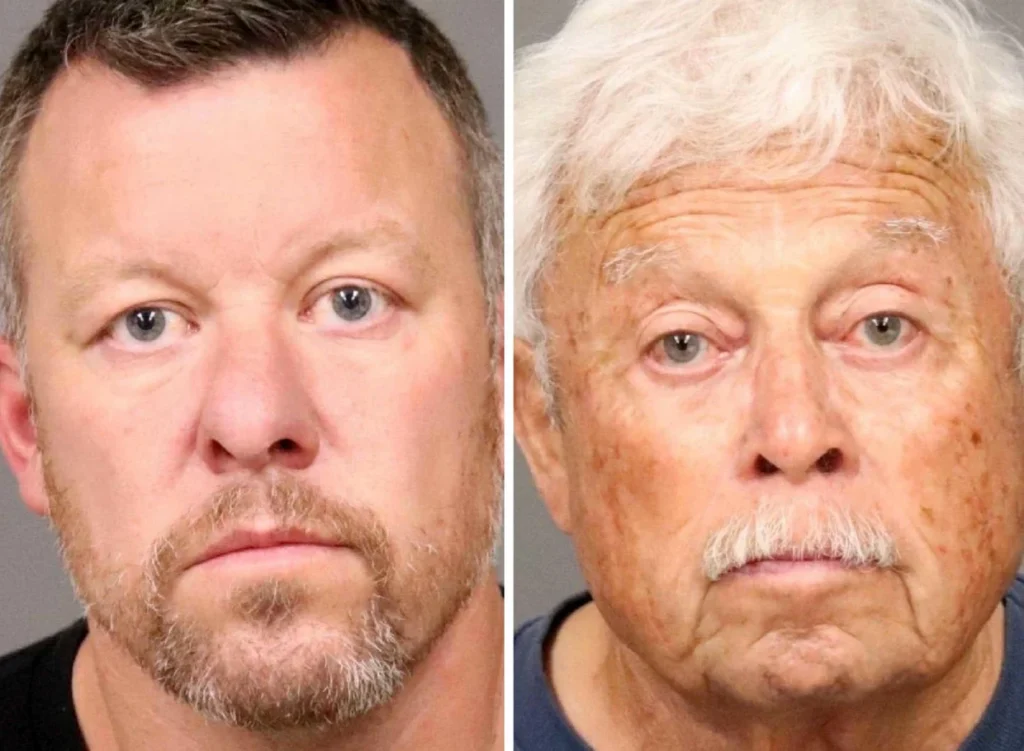
The trial took place in Salinas, Monterey County, roughly 110 miles north of San Luis Obispo. The proceedings were moved there after the defense argued that extensive publicity surrounding the case made it impossible for Paul and Ruben Flores to receive a fair trial in San Luis Obispo County.
Although the two men were tried at the same time, they had separate juries. Each jury heard its own opening and closing arguments, and jurors were sometimes excluded from the courtroom when testimony or evidence applied only to the other defendant.
Over the course of the trial, prosecutors called dozens of witnesses, including Kristin’s parents, college friends, detectives, forensic experts, and people who knew Paul Flores.
Some witnesses described their interactions with Flores or conversations they had with him around the time Kristin disappeared. Officers involved in the early investigation also testified.
Two women additionally took the stand and testified that Flores had sexually assaulted them, including one who said he had raped her.
On October 18, 2022, the two juries returned their verdicts. Paul Flores was convicted of first-degree murder in Kristin Smart’s death, while Ruben Flores was acquitted of being an accessory after the fact. Kristin’s remains had still not been found.
San Luis Obispo County District Attorney Dan Dow credited Chris Lambert’s podcast, “Your Own Backyard,” with helping investigators identify new witnesses who ultimately became important to the prosecution.
After the verdicts, Kristin’s family expressed conflicting emotions. They thanked investigators and prosecutors for their work but emphasized that the conviction could not erase their loss, saying that without Kristin, there could be no true sense of victory.
On March 10, 2023, Paul Flores, then forty-six, was sentenced to 25 years to life in prison without parole.
Monterey County Superior Court Judge Jennifer O’Keefe also ordered him to register as a sex offender and described him as “a cancer to society.” Before imposing the sentence, the judge rejected two defense requests seeking a new trial and dismissal of the charges or an acquittal.
Although Flores received a sentence of 25 years to life, he became eligible for a parole board hearing after 15 years. At that point, the board would have the authority to decide whether to grant or deny his release.
Aftermath and Ongoing Search
In January 2024, Kristin Smart’s family filed a civil lawsuit against California Polytechnic State University, accusing the university of negligence, negligent infliction of emotional distress, and wrongful death.
The family said they did not fully understand the extent of the university’s alleged failures until May 2023, when Cal Poly’s president apologized to them.
The lawsuit argues that the university could have prevented Kristin’s death if it had properly responded to and disciplined Paul Flores following a series of harassment complaints involving him.
After mediation efforts failed, the Smart family and Cal Poly were scheduled to appear in court in August 2025, where the university was expected to challenge the legal sufficiency of the family’s claims.
Paul Flores has also faced violence while serving his sentence. He was attacked at least twice in prison. In 2024, a judge ordered him to pay the Smart family slightly more than $350,000 to cover expenses they had incurred following Kristin’s death.
The family has said it would be willing to give up the restitution if Flores revealed the location of Kristin’s remains.
One of the attacks involved Jason Budrow, a twice-convicted killer who was charged with attempted murder in connection with the assault on Flores.
Flores was later stabbed a second time in the recreation yard at Pleasant Valley State Prison by another inmate in an incident investigated as an attempted homicide.
Following the attacks and concerns about his safety, Flores was transferred from Pleasant Valley State Prison to Corcoran State Prison.
Flores also continued challenging his murder conviction through the courts. He filed separate appeals with California’s Second District Court of Appeal in October 2024 and July 2025, but both were unsuccessful.
On January 14, 2026, the California Supreme Court rejected his second appeal seeking to overturn or reduce his conviction, leaving his conviction for Kristin’s killing in place.
The California Attorney General’s Office had previously urged the appellate court to reject Flores’ arguments, describing them as without merit.
In April 2025, the Attorney General’s Office made that position clear in court, and a further brief filed in May 2026 continued to oppose Flores’ claims.
The search for Kristin’s remains has continued despite Flores’ conviction. In May 2026, San Luis Obispo County Sheriff Ian Parkinson announced that investigators had found evidence suggesting human remains had been present at a property connected to the Flores family.
However, authorities could not determine whether the remains were Kristin’s or whether they would obtain another warrant allowing them to excavate Susan Flores’ property.
Scientists conducted soil-vapor testing at the property, using an emerging method that examines gases beneath the ground for volatile organic compounds associated with human decomposition.
Investigators continued examining the Susan Flores property after earlier soil testing indicated that human remains may have been present there, but Kristin’s remains were not recovered.
As of this writing, Kristin Smart’s remains have still not been found, while Paul Flores remains incarcerated at California State Prison, Corcoran, serving his life sentence.
Remembering Kristin Smart
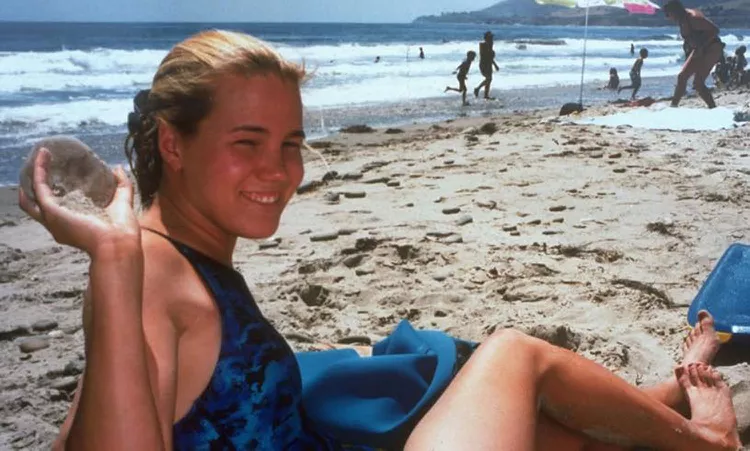
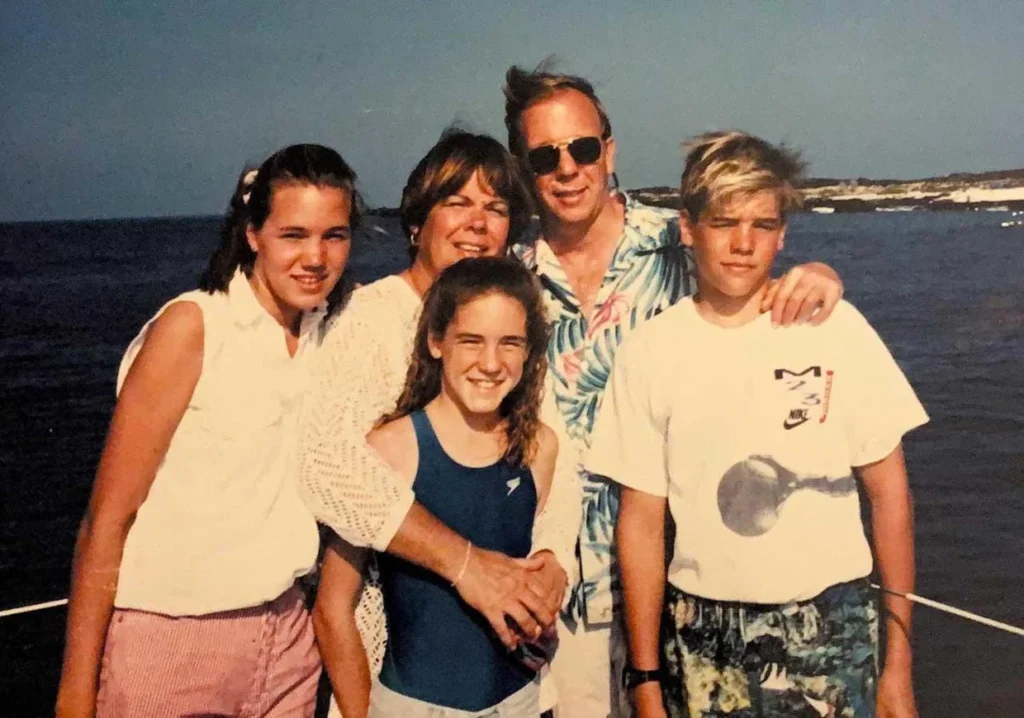
Kristin Denise Smart was born on February 20, 1977, in Augsburg, Bavaria, in what was then West Germany, where her parents, Denise and Stan, worked as teachers for children of American military families stationed overseas.
The couple had not expected to have children and were overjoyed when Kristin arrived. From an early age, she was remembered as an exceptionally quick learner, walking and talking ahead of schedule. Two younger siblings, Matthew and Lindsey, followed, and the family eventually settled in Stockton, California.
As an older sister, Kristin was affectionate and involved, spending time with her siblings rather than avoiding them. She managed the challenges of ADHD while remaining a dedicated student, and she was drawn especially to the water, spending much of her free time swimming and surfing.
She also played soccer and took part in school plays. As she grew older, she began babysitting and found genuine joy in engaging with children through games and creative projects, earning the trust of the families she worked for.
Through Girl Scouts, her neighborhood, and school activities, she built a close circle of friends, and her family welcomed guests into their home often.
Kristin showed real talent for drawing, particularly detailed renderings of houseplants, and for a time she considered a future in architecture. She also expressed interest in journalism, inspired by the idea of traveling and interviewing people from around the world.
During high school, she spent a summer in London and another in Venezuela as an exchange student, and she transferred to a school in Napa for her junior year to be closer to her father, though the move proved difficult and she returned to Stockton to graduate in 1995.
That summer, she worked as a lifeguard and camp counselor at a camp in Hawaii, where she formed a close friendship with a fellow counselor and supported her through the loss of a family member.
Choosing to remain close to home for college, Kristin enrolled at California Polytechnic State University in San Luis Obispo, shifting her academic focus from architecture to communications with hopes of pursuing journalism.
After starting the year in off-campus housing, she moved into a dormitory in January 1996, eager for a fuller college experience.
She worked early morning shifts as a campus lifeguard and called her parents weekly, and that spring she confided to her mother that she was struggling to keep up with her coursework, at one point asking to leave school altogether.
Her mother encouraged her to persevere, sending her a letter of support in early May 1996, just weeks before Kristin disappeared from the campus she had only recently come to call home.


Recent Comments