

On March 2, 2015, Angelica “AJ” Hadsell was alone at her family’s home in Norfolk, Virginia. Her mother, Jennifer, and her younger siblings had left for work and school around 7 a.m. that morning.
Her stepfather, Wesley Hadsell, was no longer living in the house at the time because Jennifer had recently discovered he was using drugs and asked him to leave.
He was staying at a nearby hotel but stopped by the home briefly that morning, around 7 a.m., to swap his personal truck for his work van.
By midafternoon, Jennifer had not heard from AJ and reached out to Wesley to ask if he had been in contact with her. AJ had been sending her mother text messages that seemed unusual.
The messages claimed she was out with friends and needed space, but she would not say where she was. Wesley began texting AJ as well and received similarly strange replies.
When Jennifer returned home from work, she found a handwritten note on the kitchen counter that read, “Dear Madre, with everything that’s going on it’s a lot to deal with.”
Those close to AJ said she was not someone who would leave a note instead of calling or texting directly, and the tone did not match her usual way of communicating.
As family members reached out to AJ’s friends, most said they had not heard from her either, aside from the same unusual messages that eventually stopped altogether.
AJ’s younger sister told police that when she arrived home from school that day, the front door was unlocked and laundry had been left half-folded in the living room. AJ’s wallet, still containing money, had been left on the couch. The scene suggested she had been home and was interrupted while doing routine tasks.
On March 3, Jennifer reported AJ missing. Investigators with the Norfolk Police Department began interviewing family members the next day to establish a timeline. Jennifer confirmed she last saw AJ around 7 a.m. on March 2.
Wesley told police he had seen AJ around 12:30 p.m. that day at a gas station near his workplace, where he gave her one hundred dollars in cash without explaining what it was for.
He described her last known outfit, which included a blue softball jacket with her name embroidered on the front. He said he watched her walk in the direction of home afterward.
Early Suspicions and Conflicting Evidence
Investigators quickly began building a list of possible suspects. AJ’s ex-boyfriend, Josh, was among the first to be considered, though officers noted that his account of a mutual breakup, combined with a solid alibi, made him an unlikely suspect. He was not ruled out entirely, but attention shifted elsewhere.
One person who drew early scrutiny was Corey French, a close friend AJ had briefly dated in the past before the two settled into a platonic friendship. Corey took an active role in the search efforts after AJ disappeared, helping distribute flyers and search nearby areas.
On March 5, while walking home from work, he found a piece of AJ’s credit card and reported it to police. Investigators were skeptical of the circumstances, given that her former boyfriend had located a significant piece of evidence.
Corey explained that although he and AJ remained friends, months had passed since they had last seen each other in person.
The following day, another friend of AJ’s, Andre Barr, contacted police after discovering AJ’s softball jacket, the same one she had last been seen wearing, hidden behind a couch cushion at Corey’s house.
Andre did not confront Corey about the discovery and instead left the house before calling authorities. A search of Corey’s home confirmed the jacket was exactly where Andre described.
Investigators brought Corey in for a lengthy and intense interrogation, during which they showed him the jacket. He reacted with visible shock and denied any involvement, offering no explanation for how the item ended up in his home. Without further proof, police were forced to release him.
Throughout the search, Wesley positioned himself as one of the most active voices calling for AJ’s return. He organized volunteer search parties, raised approximately $33,000 in reward money, and frequently criticized law enforcement for what he described as insufficient effort.
He also claimed to be conducting his own investigation based on tips he said he received, though none of the leads he pursued produced results. One tip involved a neighbor who reported seeing AJ driving toward her house on March 2, followed a minute later by a white four-door car.
Wesley suggested this vehicle belonged to someone AJ had been having trouble with, claiming she had told friends and a cousin that a man would not leave her alone. No further details about this individual ever emerged during the investigation.
After Corey was released without charges, Wesley confronted him directly. He parked outside Corey’s home and played an air horn throughout the night.
He also ordered a pizza under AJ’s name with a message written on the box accusing Corey of being responsible for her disappearance, then had it delivered to his house. State and federal authorities, along with the National Center for Missing and Exploited Children, joined the search effort during this period.
Investigators also looked into AJ’s first stepfather, Zach Hoffer, given the strained relationship that developed between him and the family after his divorce from Jennifer.
He had an alibi placing him away from the home at the relevant time and appeared visibly distraught over AJ’s disappearance. He voluntarily offered his DNA to investigators, who ultimately ruled him out as a suspect.
The Case Begins to Unravel
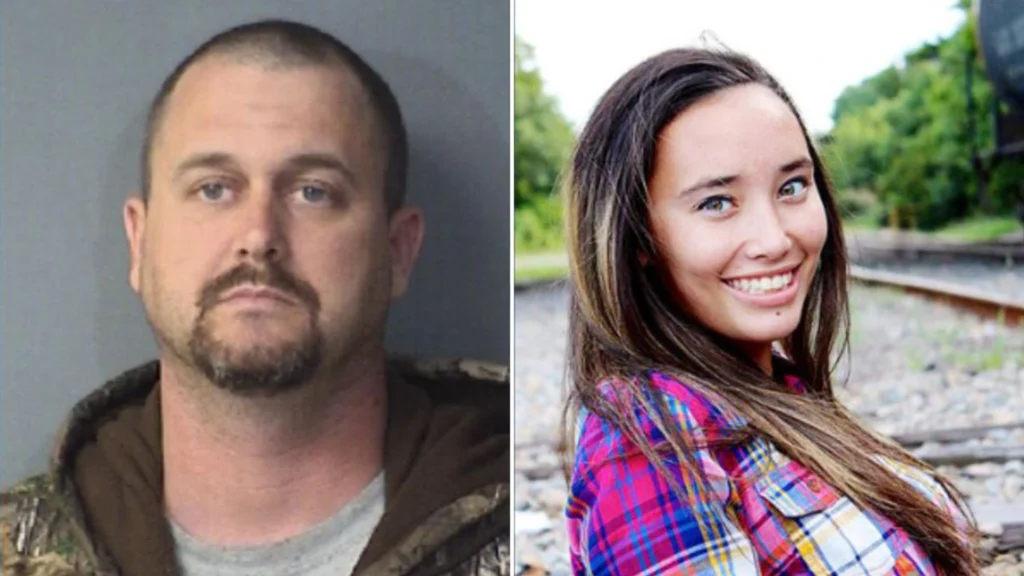
Andre Barr became a suspect himself during the third week of the investigation after he and Wesley reported finding clothing believed to belong to AJ along a roadside approximately 25 miles from her home on March 20.
Wesley made the call to police, stating Andre had been with him at the time. Investigators found it suspicious that the same small group of friends had located two major pieces of evidence, and they brought both Andre and Wesley in for separate questioning that night.
Under pressure, Andre revealed that neither discovery had happened by chance. He said Wesley directed him to search Corey’s house specifically for the jacket and told him exactly where to find it.
According to Andre, Wesley admitted he had broken into Corey’s home searching for AJ and found the jacket there, but did not report it himself out of fear of being arrested due to his existing felony record.
Instead, he asked Andre to retrieve it and make the discovery appear accidental. Andre also said Wesley had driven erratically before suddenly claiming to spot AJ’s clothing along the roadside, contradicting his earlier claim of receiving an anonymous tip about its location.
As investigators dug deeper into Wesley’s background, they discovered a criminal history that included charges for burglary, forgery, strangulation, rape, and kidnapping involving his estranged wife.
When they reviewed security footage from the gas station where Wesley claimed to have last seen AJ, neither of them appeared on the recordings.
During a fifteen-hour interrogation, Wesley repeatedly denied involvement in her disappearance, though he was recorded telling himself he was “screwed” while briefly left alone in the room.
He eventually admitted to breaking into Corey’s house but insisted he had not planted the jacket as evidence. His claim of receiving an anonymous tip about AJ’s clothing also fell apart when he said he had deleted his call history to free up phone storage, and investigators later determined no such call had ever been made.
Although there was not yet enough evidence to charge Wesley in connection with AJ’s disappearance, his admission to breaking and entering gave investigators probable cause to search both his hotel room and his work van.
Inside the hotel room, they found more than one hundred rounds of ammunition hidden in an air vent, along with a scale and a white powdery substance later identified as heroin, both of which he was prohibited from possessing as a convicted felon.
In the work van, investigators discovered gloves, duct tape, a shovel, a hairband, a photograph of AJ, and a Garmin GPS tracker mounted on the dashboard.
Mounting Charges and a Grim Discovery
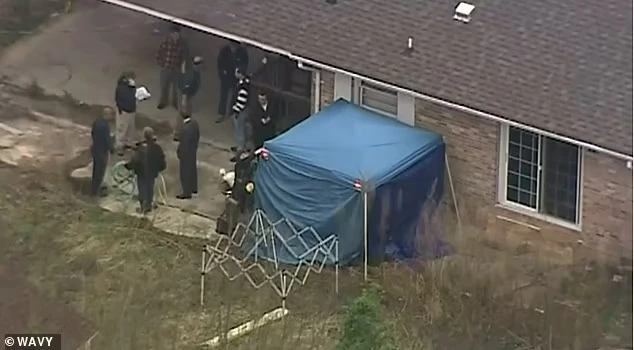
Wesley faced new charges for breaking and entering, obstruction of justice, and possession of ammunition as a convicted felon. He was also charged with animal cruelty after admitting he punched a dog belonging to Corey’s family during the break-in.
A judge denied him bond on March 27. During this period, investigators noted that Wesley consistently referred to AJ in the past tense during jailhouse interviews, a pattern that struck those familiar with the case as unusual for someone whose stepdaughter’s fate remained unknown.
Additional details emerged about how the break-in at Corey’s house had been planned. AJ’s ex-boyfriend, Josh, had reportedly provided Wesley with information about the layout of Corey’s home and whether it had an alarm system, apparently unaware of how the information would be used.
On March 8, Andre and one of AJ’s cousins visited Wesley at his hotel room, where he displayed a bag containing two firearms and described a plan to harm Corey French, stating he intended to dispose of him in a body of water to eliminate evidence. The plan was never carried out.
In June 2015, against his attorney’s advice, Wesley spoke publicly and maintained his innocence, claiming that AJ had told him in their final conversation that she had been using heroin and suggesting someone else had been sending texts from her phone.
In September 2015, he was indicted on the ammunition possession charge, and in October he was formally charged with heroin possession. His bond was denied again after a letter he wrote to his mother indicated he would flee if released and reiterated his claim that he was being framed.
He later pleaded guilty to the ammunition charge and was sentenced to ten years in prison, though he continued to deny any role in AJ’s death.
Investigators reviewed data from the Garmin GPS device recovered from Wesley’s van, which had been turned off on March 2 with minimal data recorded on March 3.
On March 4, however, the device showed the van traveling to an abandoned house more than 45 miles southwest of AJ’s home. On April 9, searchers located AJ’s body in a drainage ditch behind the property, concealed beneath a piece of plywood.
She was found face down and was wearing the same clothing Wesley had described. The position of her clothing suggested a possible sexual assault, though the extent of decomposition made this impossible to confirm.
Her remains were officially identified on April 10. Examiners noted severe bruising to her chest and face, and her cause of death was determined to be acute heroin poisoning, with toxicology showing a level three times the lethal threshold.
Investigators subsequently obtained surveillance footage from a store near AJ’s home showing Wesley’s van traveling toward the family residence around 12:16 p.m. on March 2, despite his claim of meeting her elsewhere, and driving away roughly an hour later.
Data extracted from AJ’s phone placed it inside Wesley’s hotel room from the afternoon of March 2 into the morning of March 3, supporting the theory that he had been the one sending messages from her device.
His drug dealer told police Wesley had purchased eight hundred dollars’ worth of heroin and cocaine in the early morning hours of March 3.
Coworkers recalled that Wesley left for an unusually long lunch on the day AJ disappeared and returned visibly agitated before asking to leave work early. A cadaver dog later alerted inside his hotel room during a separate search.
Trial, Delays, and a Verdict
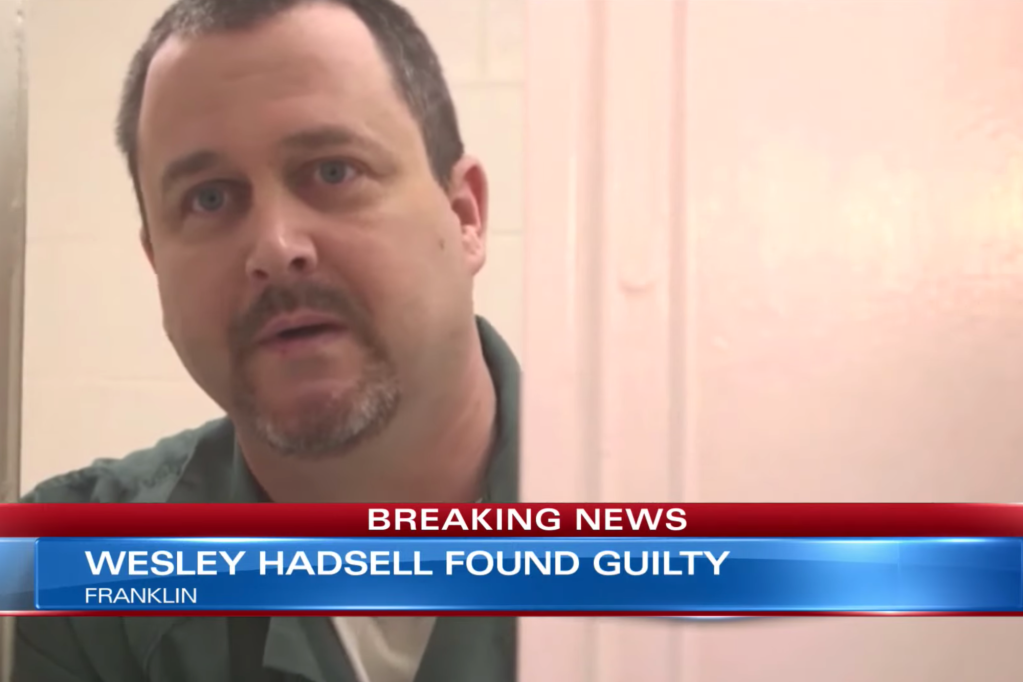
In November 2018, Wesley was indicted on one count of first-degree murder, one count of second-degree felony murder, and one count of felony concealment of a body. A fellow inmate later told authorities that Wesley had confessed to involvement in AJ’s death.
His murder trial began in February 2020, but was declared a mistrial on its second day at the prosecution’s request after Wesley reversed a prior agreement regarding what evidence could be presented, requiring the prosecution to adjust its approach.
A new trial date was set for May 2020, but the COVID-19 pandemic delayed proceedings significantly. The trial finally began in January 2022 and lasted nearly three weeks.
Prosecutors relied heavily on circumstantial evidence, including the GPS data placing his van at the location where AJ’s body was found, since no direct physical evidence tied him to how the heroin entered her system.
After deliberating for approximately 45 minutes, the jury found Wesley Hadsell guilty of first-degree murder and concealment of a body.
He was sentenced on April 4, 2022, to life in prison plus fifteen years. During the sentencing hearing, Zach Hoffer, AJ’s first stepfather, was escorted out of the courtroom after lunging toward Wesley when the defense objected to him delivering a victim impact statement.
Wesley has continued to maintain his innocence and has pursued efforts to appeal his conviction.
Remembering AJ
Before the events that defined the final chapter of her life, AJ Hadsell was known for her warmth, curiosity, and fearless spirit. Born on August 9, 1996, in Chesapeake, Virginia, she was raised primarily by her mother in her earliest years before her mother married Zach Hoffer, who became her first father figure.
AJ went on to have four younger half-siblings and embraced her role as an older sister with patience and creativity, often organizing small performances for her parents.
She showed remarkable athleticism and academic ability from a young age. She broke school reading records in fourth and fifth grade and participated in softball, basketball, golf, field hockey, and tennis throughout her childhood.
She began rock climbing at just four years old and grew increasingly confident and independent in the sport as she got older. Following her mother’s second marriage to Wesley Hadsell, AJ was formally adopted and took his last name, a milestone she reportedly welcomed with excitement.
In the fall of 2014, she enrolled at Longwood University, where she pursued a double major in information technology and computer programming while continuing to play softball and field hockey, with hopes of graduating in just three years.



Recent Comments