
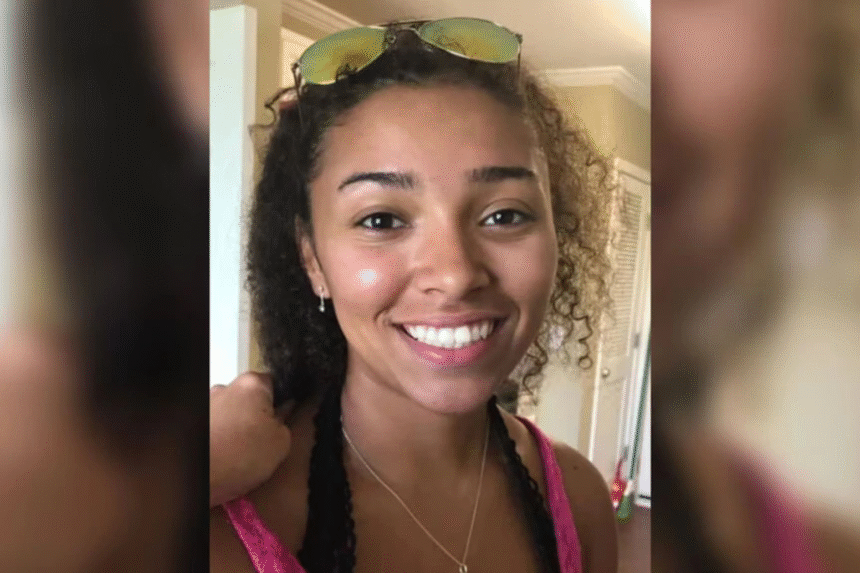
On October 23, 2019, 19-year-old Aniah Blanchard disappeared from Auburn, Alabama, after a stop at a gas station. Her car was later found damaged in Montgomery with evidence of a violent struggle.
A Night That Ended in Silence
On October 23, 2019, Aniah Blanchard and her brother, Elijah Blanchard Jr., made a 180-mile round trip from Auburn, Alabama, to Hamilton to attend a funeral.
Because the two lived only minutes apart, they had spent much of the day together, and by the time the service ended, Aniah was eager to begin the four-hour drive home. Both siblings had work obligations the next morning.
On the way back, they stopped in Birmingham, where their stepfather, UFC heavyweight fighter Walt Harris, was training for an upcoming fight. Harris asked them to stay the night, but Aniah told him she was fine to keep driving.
After saying goodbye, the siblings continued toward Auburn, arriving at around 11 p.m. Aniah dropped her brother at his home, roughly three miles from her own apartment, and he told her to call him once she was settled. Tired from the long day, he fell asleep almost immediately.
At 11:09 p.m., Aniah’s roommate, Sarah O’Brien, texted her asking if she was close to home. Aniah replied that she was.
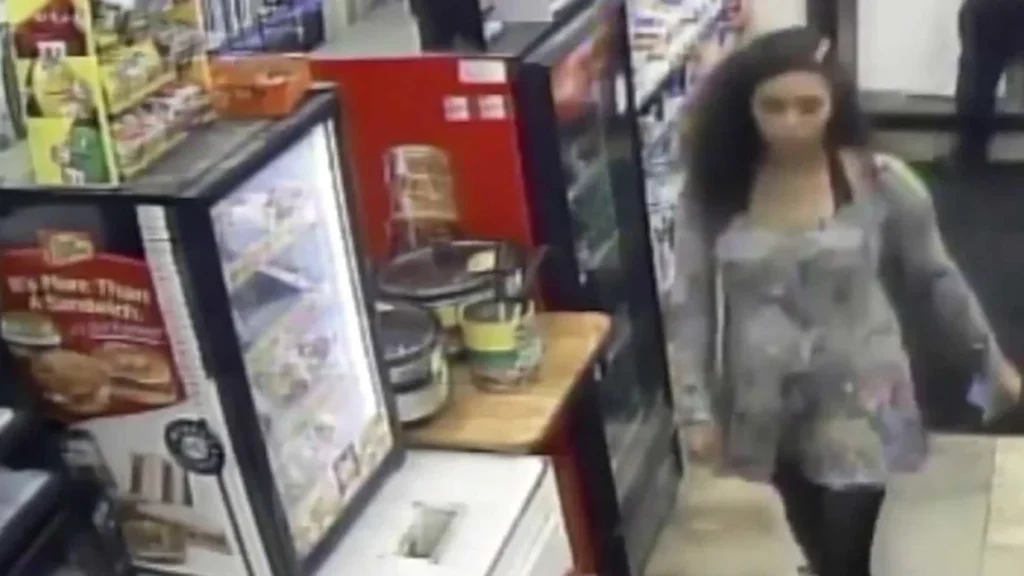
Around the same time, surveillance footage later showed Aniah entering a Chevron gas station on South College Street in Auburn, where she purchased a bag of sour cream and onion chips and a drink before leaving within a few minutes.
About thirty minutes after their first exchange, Sarah O’Brien messaged Aniah again, asking if she had gone out without her. Aniah responded that she was smoking with someone named Eric, whom she said she had just met.
When Sarah O’Brien asked where they were, Aniah did not reply. Checking the location-sharing app the two used, Sarah O’Brien saw that Aniah appeared to be near an apartment complex commonly occupied by college students. Assuming her roommate was out with new acquaintances, Sarah O’Brien went to bed.
A Frantic Search Begins
The next morning, Elijah Jr. realized he had never received the call his sister promised. Their mother, Angela Harris, tried to reach Aniah by FaceTime without success.
When Sarah O’Brien checked Aniah’s room, she found it untouched, and Aniah’s phone appeared to be off or no longer sharing location data. Sarah O’Brien relayed the strange conversation about “Eric” to Elijah Jr., and the family immediately sensed something was wrong.
Aniah was known for being dependable, and she had never missed a shift at her babysitting job before. After searching for her car without success, the family contacted the police, and Aniah was officially reported missing.
Walt and Angela began the two-hour drive to Auburn. Investigators initially found no clear signs of foul play, but everyone close to Aniah insisted that disappearing without explanation was completely out of character for her.
Two days later, her black Honda CR-V was located at Park Place Apartments in Montgomery, roughly 55 miles from Auburn.
The vehicle was damaged, and blood was visible inside, prompting police to expand the search area to cover the stretch between Auburn and Montgomery.
As word of Aniah’s disappearance spread, her hometown of Homewood rallied to support the family. Community members organized a vigil that drew roughly 200 people to her childhood church.
A friend for whom Aniah frequently babysat later described trying to reassure the children in her care that Aniah would return, even as the search stretched into its second week.
By that point, investigators had received hundreds of tips, and a reward for information had grown to $15,000, aided in part by a donation from UFC president Dana White. A task force of about 70 members, including the FBI, U.S. Marshals, and Homeland Security, joined the effort.
Aniah’s parents also met with the mother of Natalee Holloway, another young woman whose 2005 disappearance in Aruba was never solved, as they searched for guidance on how to endure the uncertainty.
A Break in the Case
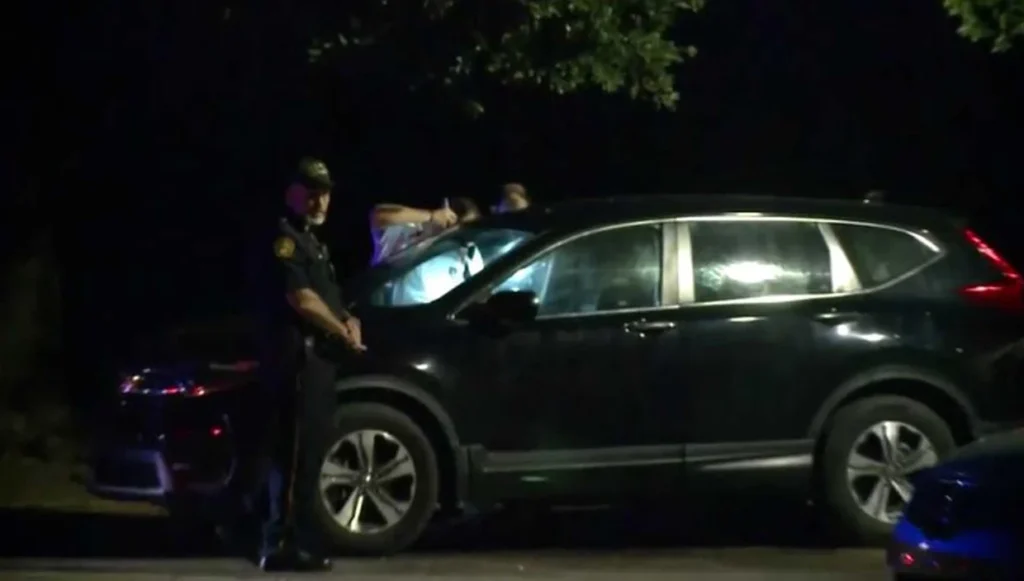
A forensic examination of Aniah’s car revealed that most of the blood was concentrated on the passenger side, along with a bullet hole in the passenger door. Testing confirmed the blood belonged to Aniah, and authorities said the volume suggested a life-threatening injury.
Investigators also determined that her car’s license plate had been captured by cameras at the Chevron station shortly before midnight on the night she disappeared, matching the timeline Sarah O’Brien had pieced together from their messages.
As footage from the gas station was reviewed more closely, a witness came forward describing having seen a man forcing Aniah into her own car in the parking lot before the vehicle drove away.
The witness said he did not intervene or call for help because a companion with him urged him not to get involved.
Investigators used the surveillance footage to identify a person of interest: a Black male in his late twenties or early thirties, approximately 5-foot-8 to 5-foot-10 and around 200 pounds, wearing dark pants, dark shoes, and a camouflage hoodie.
He had arrived at the station separately from Aniah, driving an older-model Lincoln Town Car, and had been seen glancing in her direction while purchasing alcohol.
After the two left together in Aniah’s car, license plate readers picked up the vehicle again about an hour later as it entered Montgomery, following a brief stop at another gas station where the man bought a cigar.
The Hunt for a Suspect
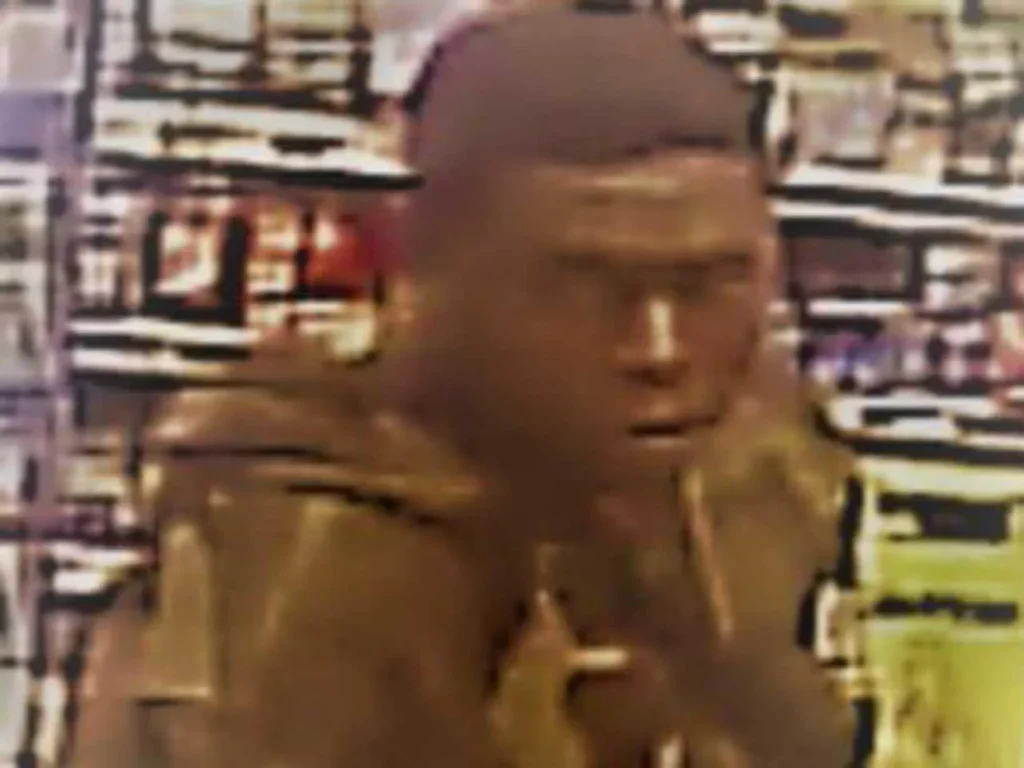
Police quickly identified the man from the footage as 29-year-old Ibraheem Yazeed, who was already known to law enforcement for a lengthy history of violent crime.
His record included the attempted killing of two police officers in 2012, a 2017 arrest for assaulting a law enforcement officer, and a January 2019 robbery in which he and an accomplice beat two men at a Montgomery hotel, leaving a 77-year-old victim unconscious.
Yazeed had been charged with kidnapping, attempted murder, and robbery in that case but had been released after posting bail.
With Aniah’s case now being investigated as a kidnapping, authorities issued a warrant for Yazeed’s arrest and warned the public that he should be considered armed and dangerous.
Crime Stoppers offered a $15,000 reward for information leading to his capture, and the total reward for the case eventually surpassed $100,000, bolstered by additional donations tied to the UFC community.
U.S. Marshals eventually tracked Yazeed to a wooded area in Escambia County, Florida, where he was taken into custody after resisting arrest.
Following his extradition to Alabama, Yazeed was formally charged with first-degree kidnapping. At a court hearing, Walt Harris described struggling to contain his anger as Yazeed appeared composed and unconcerned.
A Lee County judge ordered Yazeed held without bond and directed that he submit to DNA testing.
Around the same time, 35-year-old Antione Fischer was arrested and charged with first-degree kidnapping for allegedly providing transportation to Yazeed and helping dispose of evidence.
Fischer had a prior conviction for felony murder from 2007, for which he had served three years of a twenty-year split sentence.
More than three weeks after Aniah went missing, her father and stepmother appeared publicly to discuss the case, expressing confidence in the Auburn Police Department’s handling of the investigation and noting that detectives had been communicating with the family daily.
They also addressed public speculation that the crime might have been premeditated, stating their belief that it had instead been a random encounter, possibly beginning as a carjacking.
As the investigation continued, a third man, 63-year-old David Lee Johnson Jr., was arrested and charged with hindering prosecution after admitting he knew his son had driven Yazeed out of state while a warrant was active.
DNA analysis of Aniah’s car revealed a mixture of genetic material from at least two people on the steering wheel, including Aniah’s, along with similar mixed results on a vape cartridge, the headrest, and the gear shift.
In several instances, the second contributor’s DNA was insufficient for a definitive match, a common but frustrating limitation in cases where a vehicle interior appears to have been cleaned.
Investigators noted the smell of sanitizer on a door handle, raising the possibility that portions of the car had been wiped down after the abduction.
Despite these gaps, prosecutors determined they had sufficient evidence to escalate the case. In early December, Yazeed’s charges were increased from first-degree kidnapping to two counts of capital murder: murder committed during a kidnapping and murder committed during a felony.
He pleaded not guilty, and the district attorney announced that prosecutors intended to pursue the death penalty.
Fischer, meanwhile, continued cooperating with investigators, providing additional details about the events following Aniah’s abduction, though the charges against him were ultimately dropped after authorities concluded his involvement did not meet the legal threshold for accomplice liability. The charges against Johnson were dropped as well.
Charges, Trial, and a Law Named for Her
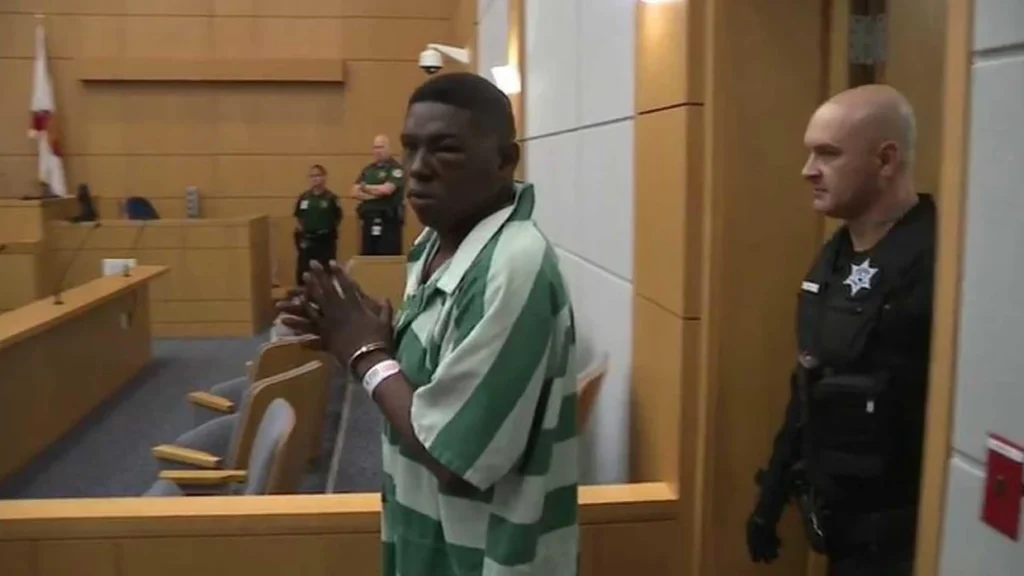
On November 25, 2019, more than a month after Aniah disappeared, human remains were discovered in a wooded area behind a church in Macon County, along with scattered clothing and a boot.
Investigators asked Walt and Angela to come to the police station, where they were shown a photograph of the boot. Walt recognized it immediately, having purchased the boots for Aniah during a trip to New York.
Medical examiners later confirmed the remains were Aniah’s and determined that she had died from a gunshot wound to the head.
Preliminary hearings originally scheduled for April 2020 were delayed due to the COVID-19 pandemic, postponing the case for an extended period.
While awaiting trial, Yazeed was charged with additional offenses, including biting a corrections officer while incarcerated.
He was also connected to a 2018 cold case involving the fatal shooting of Steven Dubose in a wooded area and the attempted murder of a woman shot during the same incident.
Jury selection for Yazeed’s trial eventually began years later, drawing from an initial pool of 450 potential jurors. In March 2026, more than seven years after Aniah’s disappearance, the case went to trial.
Yazeed maintained his not guilty plea throughout the proceedings. His defense argued that no direct forensic evidence, including DNA or fingerprints, definitively linked him to the crime, characterizing the prosecution’s case as built on theories rather than proof.
Prosecutors countered with surveillance footage, witness testimony, and phone records. Because a gap existed in the gas station’s surveillance footage during the moment Yazeed entered Aniah’s car, prosecutors could not say with certainty whether her initial cooperation was voluntary.
To ensure the kidnapping charge would hold regardless of how the encounter began, prosecutors argued that even if Aniah initially allowed Yazeed into her car, the extensive blood evidence and the bullet casing recovered from the passenger door demonstrated that a violent struggle had occurred as she fought for her life.
They also proposed that Aniah may have reached for Yazeed’s gun in an effort to defend herself before she was shot, a scenario consistent with information Fischer had previously provided investigators.
A forensic anthropologist and the state’s chief medical examiner testified about the recovery of Aniah’s remains from roughly 1,700 square meters of wooded terrain, describing the collection of skull fragments, vertebrae, ribs, soft tissue, and teeth.
Based on skeletal characteristics, the anthropologist testified that the remains were consistent with those of an African American woman in her late teens. The prosecution ultimately called more than 40 witnesses, while the defense rested without calling any.
After six days of testimony, the jury began deliberations. Rather than convicting Yazeed on the capital murder charges, jurors returned verdicts on lesser offenses: felony murder connected to the kidnapping and intentional murder connected to the robbery of Aniah’s car and phone.
Because he was not convicted of capital murder, Yazeed was no longer eligible for the death penalty or life without parole.
In May 2026, he was sentenced to two concurrent life sentences, the maximum penalty available under the charges, with the possibility of parole to be determined by the specific structure of his sentence.
The circumstances of Yazeed’s release on bond prior to Aniah’s murder prompted lawmakers to examine gaps in Alabama’s bail system.
At the time of the crime, the state constitution guaranteed a right to bail for all defendants except those charged with capital murder, meaning judges had been legally required to grant Yazeed bond despite his history of violent charges.
In response, Alabama voters approved Aniah’s Law as a statewide constitutional amendment in November 2022, expanding the list of offenses for which judges may deny bail entirely.
The added offenses include murder, attempted murder, first-degree kidnapping, rape, robbery, domestic violence, and aggravated child abuse.
Remembering Aniah Blanchard
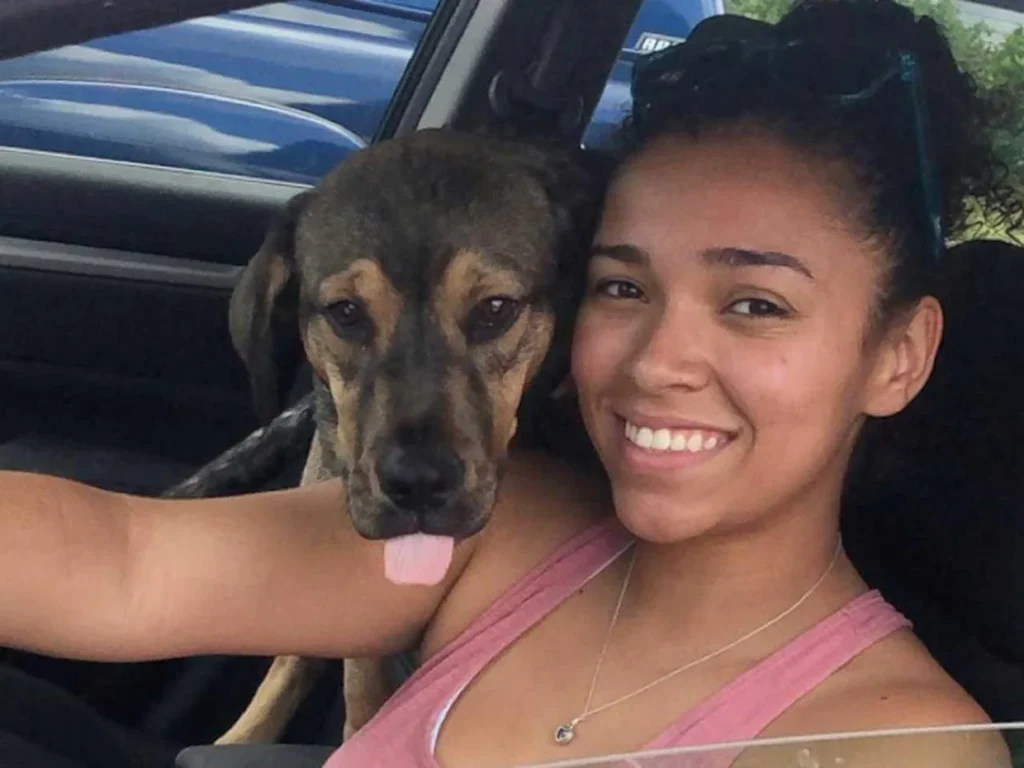
Aniah Haley Blanchard was born to Elijah Blanchard Sr. and Angela Harris and grew up in Homewood, Alabama, alongside her brother, Elijah Jr., who was just seven months older.
The two were exceptionally close throughout their childhood, remaining so even after their parents divorced in 2004.
Their father, a pastor and businessman, later remarried Yoshiba, a probate judge in Jefferson County, while their mother, a nurse, married Walt Harris.
Harris said he never considered Aniah and her brother his stepchildren, describing them instead simply as his own, and credited Aniah as one of his biggest sources of support through the highs and lows of his fighting career.
As her mother’s nursing schedule kept her working long hours, Aniah took an active role in helping care for her two younger siblings. She was athletic, excelling in softball and cheerleading, and was known for a nurturing personality that extended to everyone around her.
When it came time to consider her future, she weighed several paths, including art, business, and teaching, before settling on early childhood education.
In late 2019, she was enrolled at Southern Union State Community College in Auburn, living independently with her roommate, Sarah O’Brien, and caring for a shelter dog she had adopted and named Blue.
Friends and family described her as someone who was fully embracing the challenges and freedom of young adulthood.
Following her death, her brother took on the care of her dog and largely withdrew from public life. Her younger siblings struggled to process the loss, with her youngest sister, then six years old, frequently asking where Aniah had gone.
Her family established the nonprofit organization Aniah’s Heart to promote safety education for young people, and a scholarship and a memorial bench in one of her favorite parks were later dedicated in her name.
Her mother later reflected that no sentence handed down in court could restore what the family had lost, but that Aniah’s case had ultimately led to changes intended to protect others from similar harm.

Recent Comments