
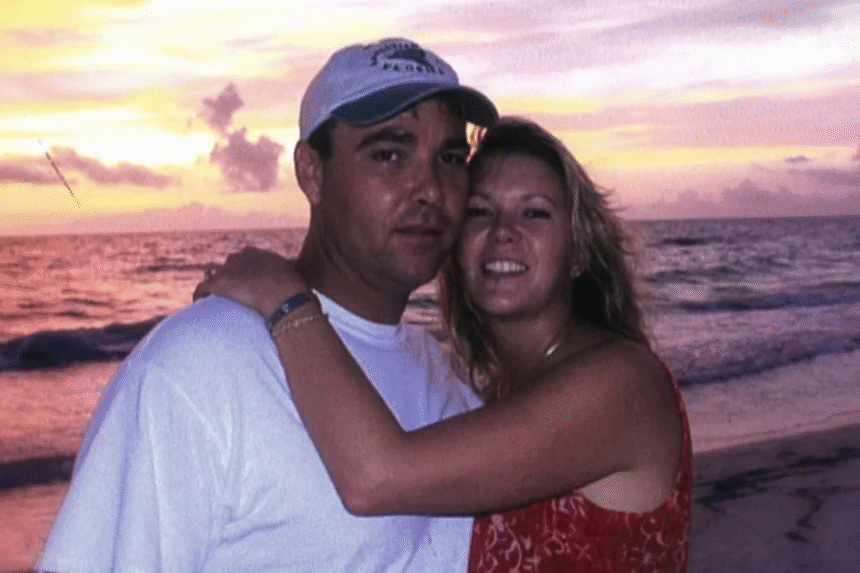
In October 2009, a woman in a quiet Los Angeles suburb vanished without a trace. What her husband, a respected local chef, would eventually admit stunned everyone who thought they knew him.
A Wife Vanishes in Lomita
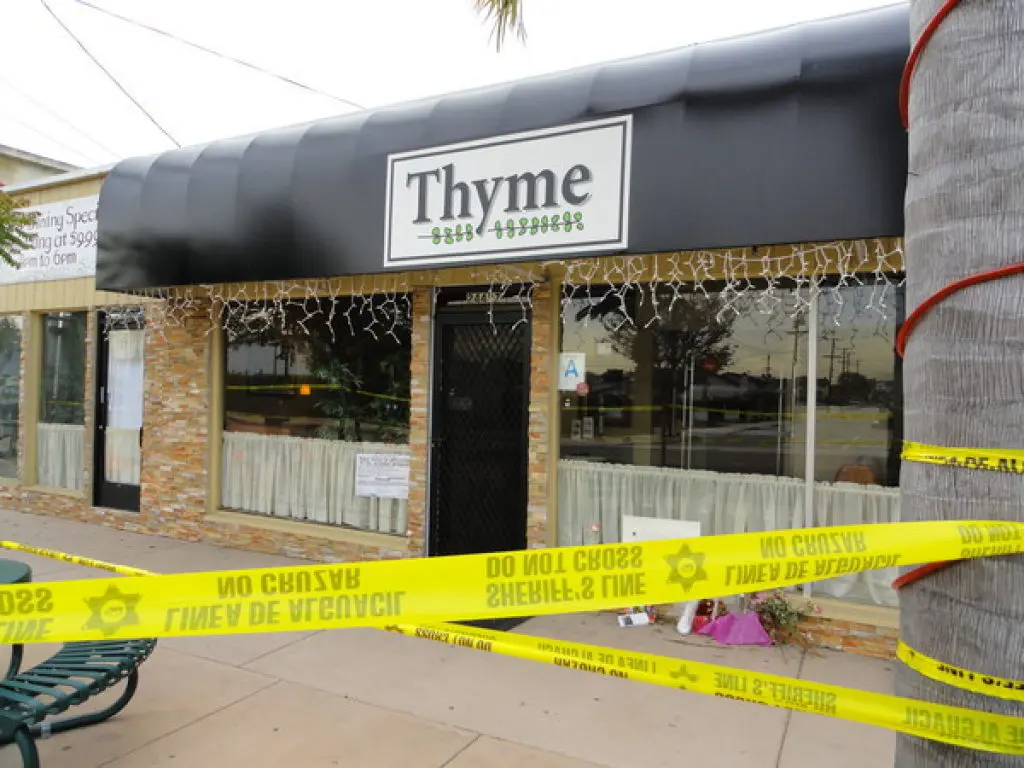
David and Dawn Viens moved to Lomita, a small suburb south of Los Angeles with one of the lowest crime rates in the region, in 2008. The couple opened a restaurant together, where Dawn worked as the hostess.
She quickly became a familiar face to regulars and to nearby business owners, including Joe Cacace, who ran a motorcycle repair shop across the parking lot. Cacace and Dawn grew close, and she began confiding in him that her husband was controlling.
David, in turn, told Cacace that Dawn had a drinking problem. David’s youngest daughter, Jackie, later said she had noticed the same issue firsthand, recalling mornings when she found Dawn drinking beer in the kitchen and hiding the empty can before David returned.
Dawn told Cacace she sometimes felt trapped in the marriage and wanted to build a measure of independence, and in the weeks before she disappeared she started setting aside money with him for safekeeping, first around seven hundred dollars, then more.
On October 18, 2009, she called him to say she had saved an additional one thousand dollars and planned to bring it by on Monday. She never arrived, and she never returned to the restaurant either. Cacace noticed that her car remained parked nearby, but he never saw Dawn again after that phone call.
When Cacace asked David where Dawn had gone, David said she had left him after he insisted she enter rehabilitation for her drinking. Around the same time, David began a relationship with Kathy Galvan, a twenty-two-year-old waitress at the restaurant.
Kathy later said the two of them had not become romantically involved until sometime after Dawn disappeared.
Cacace, however, witnessed Kathy and Jackie discarding boxes of Dawn’s clothing into a dumpster behind the restaurant not long after David and Kathy began seeing each other. Kathy explained that she had thrown out the clothes out of jealousy, believing David might reconcile with his wife.
Around this same period, some employees at the restaurant began noticing that money had gone missing from the register, a detail that would later take on greater significance.
As weeks passed with no word from Dawn, friends grew alarmed and contacted her sister, who filed a missing person report. Larry Altman, a reporter with the local newspaper the Daily Breeze, published the first news story about Dawn’s disappearance on Christmas Eve 2009, two months after she was last seen.
The Investigation Widens
Altman, who also worked as a consultant for CBS News, continued reporting on the case as it developed. After his first story ran, one of Dawn’s friends called him to say there was more to the case than had been reported.
Altman then interviewed David directly. David told him that he and Dawn had argued and that she had left on foot, taking only her Louis Vuitton handbag and leaving her car behind, an unusual detail in a region where owning a car is essential for daily life.
When Altman asked whether David loved his wife and wanted her to return, David answered that he had loved her, using the past tense, a choice of words that struck Altman as significant.
Not long after Dawn vanished, David had asked Jackie to come to California and help run the restaurant. When she arrived, she noticed Dawn was gone and asked her father what had happened. He told her that he and Dawn had fought and that she had left for a few days.
Jackie eventually pressed her father further, asking directly where Dawn was. David then admitted that he had killed Dawn, describing it as an accident, and asked Jackie not to contact the police.
She agreed to keep the secret. He also asked her to send text messages from Dawn’s phone to make it appear she was still alive.
Jackie complied, and two of the messages that she and her father sent were signed with a nickname Dawn used, “Pixie,” but the word was misspelled both times, an error that stood out because Dawn had used the nickname for years and had always spelled it the same way.
As suspicion around David grew, Los Angeles County Sheriff’s homicide detective Rich Garcia met with him in person and introduced himself. David’s reaction was immediate: he turned pale and struggled to find words.
By February 2011, sixteen months after Dawn’s disappearance, Garcia had obtained a wiretap on David’s phone in an effort to gather stronger evidence against him.
A Breaking Point

With the wiretap in place, investigators looked for a way to pressure David into revealing more.
They enlisted Altman’s help, telling him that blood had been found inside the home David and Dawn had shared, in the bedroom and in another room, without disclosing that the blood was too degraded to serve as usable evidence.
Altman went to David’s restaurant to ask about the discovery but was confronted by Kathy, who denied the claim loudly in front of customers and had him removed from the property.
Around the same time, investigators visited Jackie, having come to suspect her involvement in the misspelled text messages.
She confirmed to them what had happened. Afterward, she called her father to warn him that the police had spoken with her and were closing in on him.
On February 23, 2011, Altman’s follow-up story ran on the newspaper’s front page. Kathy noticed something was wrong after David read it and pulled him aside, telling him there was something he needed to tell her.
David said he did not want to talk there and that they needed to leave. Once they were alone, he confessed that Dawn’s death had been an accident and that she was not coming back, and he told Kathy he planned to kill himself. Kathy later said she could not believe he had lied to her for so long.
The two got into David’s car, and he drove at high speed toward the coastal cliffs near Point Vicente in Los Angeles County, where the shoreline rises as high as two hundred feet above jagged rock.
A sheriff’s patrol deputy who had been monitoring traffic nearby noticed the erratic driving and began to follow, but David showed no sign of slowing down. He pulled into a parking area near the cliffs, got out of the car, and ran toward the edge, removing some of his clothing along the way.
Kathy and the deputy who arrived at the scene both tried to hold onto him and stop him from climbing over the railing at the cliff’s edge. He broke free from their grasp, kissed Kathy, and jumped, falling roughly eighty feet toward the rocks below.
When the deputy asked Kathy who the man was, she told him it was David Viens and that he had just admitted to killing his wife.
The Confession
David survived the fall, though the impact shattered his legs and broke his hips. He later said he had no memory of climbing the railing or of the jump itself. He was airlifted to a hospital, where, after being read his legal rights, investigators obtained a recorded account of what had happened to Dawn.
Detective Garcia said he believed David remained fully coherent throughout the interview despite the pain medication he was taking for his injuries.
In the time before her death, those close to Dawn said her drinking had been joined by heavier drug use; her brother later said she had turned to cocaine and other hard drugs, at times asking family members to help her obtain them.
In the account he gave investigators, David said he had blocked the bedroom door before Dawn came home in the early hours of the morning, expecting she would be under the influence of cocaine, as had become common.
Dawn pounded on the door and eventually broke through, and a confrontation followed in the living room, during which David threw cocaine he found on the table into the sink.
He said Dawn then stumbled and struck a piece of furniture before he bound her arms with packing tape to stop her from hitting him, something he claimed he had done twice before without any deadly result.
Around three in the morning, after Dawn continued screaming that he had wasted her drugs, he also placed a strip of tape over her mouth before going to sleep. When he woke later that morning, he found her body cold. She was dead.
When later asked directly whether he had meant to kill Dawn, David said no, maintaining that he had only wanted her to be quiet so that he could sleep.
David told investigators that he panicked. He wrapped Dawn’s body and drove it to the restaurant, initially planning to leave it in a dumpster before a garbage truck arrived nearby and he reconsidered.
Instead, he stated that he disposed of the body by placing it in a large pot and boiling it in the restaurant kitchen overnight and over the following days, working after closing hours so no one would notice, then breaking it into smaller pieces and discarding them a few pounds at a time in separate trash bags.
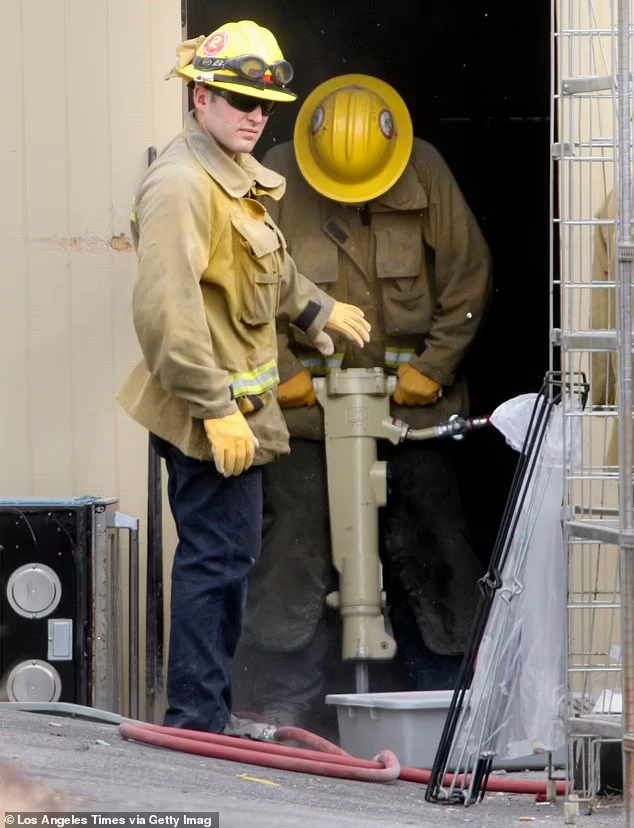
Investigators searched the restaurant afterward, using jackhammers to break through sections of the concrete floor over several days, but recovered no physical remains.
By then, he had been transferred from the hospital to the Los Angeles County Jail, where he continued to recover from his injuries. On March 2, 2011, David Viens was formally charged with Dawn’s murder.
In the months that followed, reporters and David’s mother, Sandy Viens, returned to the restaurant, by then operating as a pizzeria, to test whether the process David had described was physically possible, using a drum of the size investigators believed he had used.
Sandy said she believed the drum could have been seen from the dining room. Kathy, who had continued working alongside David in the kitchen, said she and other staff had unrestricted access to the same stove and refrigerator and that she never noticed or suspected anything unusual.
Trial, Verdict, and Sentencing
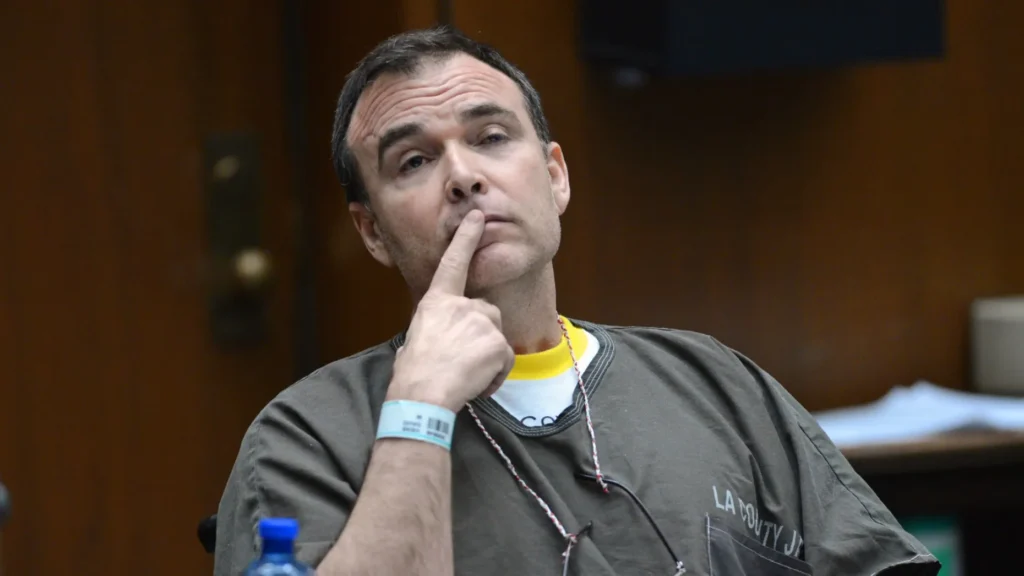
The case, formally titled The People of the State of California v. David Viens, went to trial in September 2012, nearly three years after Dawn disappeared. By then, David required a wheelchair to appear in court, a lasting result of his injuries from the cliff jump.
Jackie’s earlier account of her father’s private confession to her, along with the misspelled text messages, had by this point become central pieces of evidence in the case prosecutors built against him.
Prosecutors argued the killing was premeditated and pointed to a motive: David believed Dawn had been stealing between two hundred and three hundred dollars from the restaurant, the same missing money that employees had noticed months earlier.
Prosecutors also described how disposing of the body in the manner David had described would have required moving a container, roughly fifty-five gallons in size, on a cart through the kitchen and dining area to an outdoor shed where it could be stored during business hours without anyone noticing.
David’s defense attorney, Fred McCurry, argued that Dawn’s death had been an accident rather than a premeditated killing.
He told jurors that the use of tape to restrain Dawn was consistent with two earlier instances when David said he had done the same thing without any deadly result, and he argued the case amounted to manslaughter rather than murder.
The prosecutor, Deborah Brazil, countered that the fact Dawn had survived being bound on two earlier occasions did not make her death this time any less intentional, characterizing those earlier incidents not as isolated events but as an established pattern of domestic violence within the marriage.
David did not testify during the trial. It lasted two weeks, and after five hours of deliberation, the jury found him guilty of second-degree murder rather than first-degree murder, concluding that he had not planned in advance to kill Dawn.
Roughly six months later, in early 2013, David dismissed his attorney, thanking him by name before proceeding to represent himself at his sentencing hearing, held nearly three and a half years after Dawn’s death.
He addressed the court directly, denying that he had intentionally killed his wife of seventeen years over such a small amount of money, and he asked for a new trial, arguing he should have had the chance to testify in his own defense; the judge denied the request.
Dawn’s sister, Dayna, told the court that although she still cared for David, having known him for many years as a member of her family, she now had to live each day with the knowledge of what he had done to her sister.
David responded that no one had loved or missed Dawn more than he did, and that he had lied to police only out of fear.
The judge then sentenced David to fifteen years to life in state prison under Penal Code section 187(a), California’s second-degree murder statute, leaving the conviction subject only to further appeal.
Jackie later said she felt a lingering sense of responsibility for having kept her father’s secret for as long as she did.
Before Lomita: The Life They Built
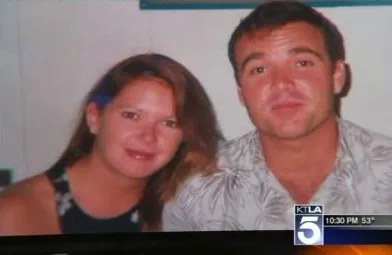
David Viens met Dawn in the early 1990s while both worked at the same restaurant in Vermont, where he was building his career as a chef and she waited tables. At the time, David was going through a divorce and had three children from that earlier marriage.
Relatives recalled that even afterward, he stayed closely involved in his children’s lives, visiting often and spending Sunday afternoons cooking elaborate family dinners. In 1993, he was convicted in Vermont of distributing cocaine.
David and Dawn married in 1997. Over the following years, they moved several times before settling on Anna Maria Island, on Florida’s Gulf Coast, where David owned a restaurant that Dawn’s brother, David Papin, managed on his behalf.
Papin later recalled that the couple kept a simple daily routine on the island, often walking the beach together for more than an hour each morning before the day began.
While Papin ran daily operations, David built a wholesale marijuana business, supplying hundreds of pounds of the drug to smaller dealers across the region. In 2005, Manatee County authorities, working with the Drug Enforcement Administration, arrested him on marijuana charges.
He agreed to cooperate with detective Randy Barnett and DEA agent Derek Pollock on further investigations, work the agents later described as dependable, noting that he returned their calls promptly and appeared for arranged meetings without fail. In exchange, he received a sentence of one year in prison rather than a longer term.
Dawn had no children of her own, and those who knew the couple said she welcomed Jackie warmly, treating her much as she would her own daughter.
Friends and coworkers who knew Dawn over the years described her as approachable and easy to be around, someone who put people instantly at ease and left a lasting impression on nearly everyone who met her.



Recent Comments