
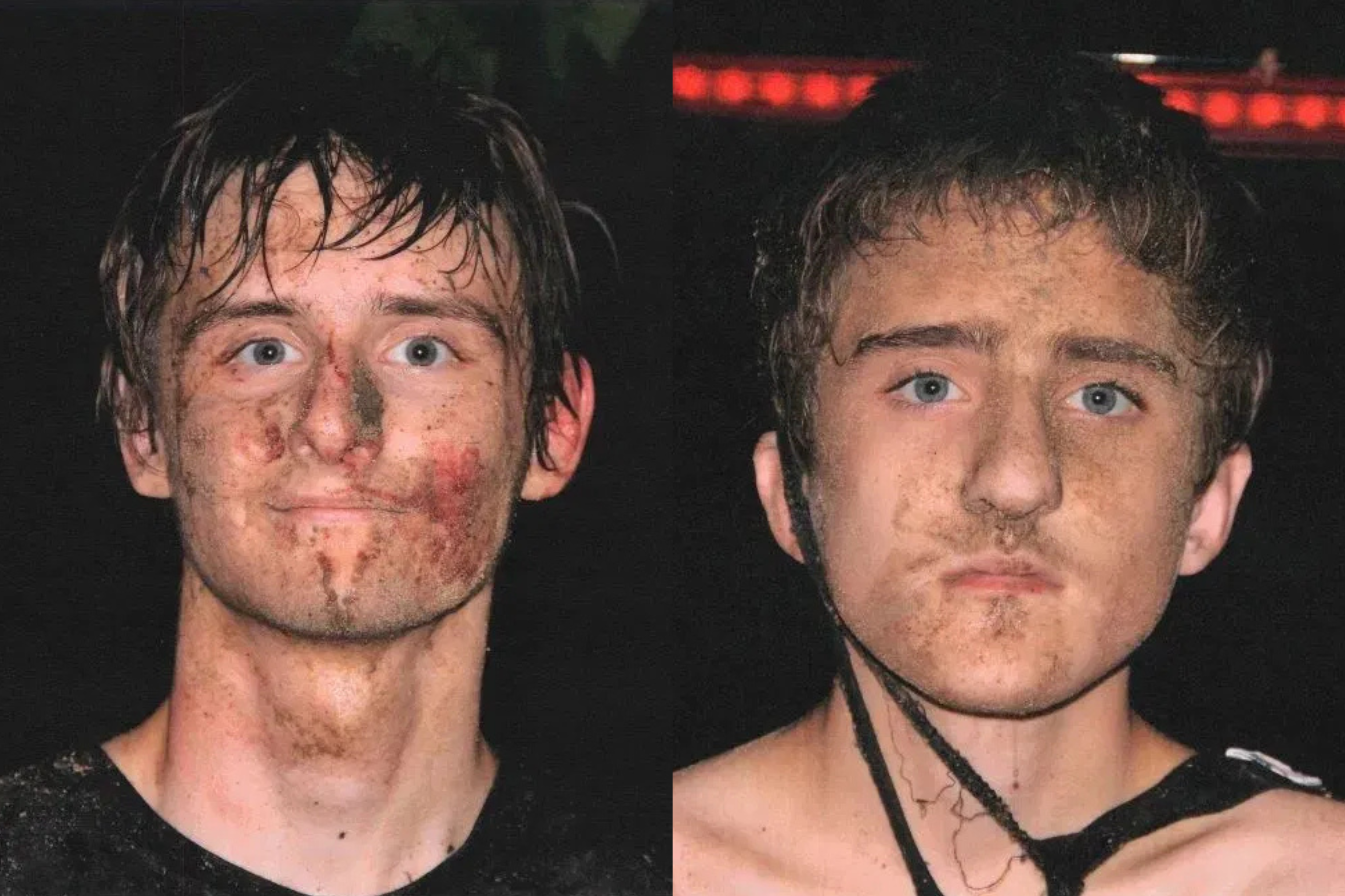
On a warm summer night in 2015, a quiet suburb of Broken Arrow, Oklahoma, became the backdrop for one of the most disturbing family tragedies in recent American history. The scene was suburban ordinary — trimmed lawns, closed blinds, still streets — until the unthinkable happened.
By the early hours of July 23, five members of the Bever family were dead. Two sisters were left alive, one barely clinging to life. And the killers, police would soon discover, weren’t strangers or intruders. They were two teenage brothers — Robert and Michael Bever — who had spent months plotting to wipe out their entire family.
A House That Kept to Itself
Neighbors on the quiet cul-de-sac didn’t know much about the Bevers. The parents, David and April, homeschooled all seven children, and the family rarely mingled outside their front door. Some neighbors later admitted they didn’t even know the children’s names until they read them in news reports.
“They kept to themselves. You didn’t see the kids outside playing like other families,” one neighbor recalled after the murders.
Inside, according to testimony later given in court, the atmosphere was far from peaceful. Crystal Bever, the surviving 13-year-old sister, told authorities her parents were physically and verbally abusive. Robert, then 18, would later describe to investigators a home charged with anger, where his parents spoke openly about people they hated and referred to biblical Armageddon as if it were a cleansing force.
It was inside this insular, tense environment that Robert and Michael began to form dark ambitions.
The Seeds of a Plan

By his own admission, Robert had been fascinated with mass killings since his early teens. Court records show that he studied infamous tragedies like the Columbine school shooting and the Aurora theater massacre, not with horror but with admiration for their scale.
Michael, two years younger, followed his brother’s lead. Together, they crafted an elaborate plan that stretched beyond their own household. In Robert’s mind, the family murders were to be the opening act of a nationwide killing spree.
They started collecting weapons — not guns, but blades, a hatchet, multiple hunting knives, throwing darts, and even a surgical knife. Detectives would later find body armor, a neck guard, shin protectors, and a black mask in the house.
Robert took a job at a religious call center, saving money to buy more equipment. Ammunition was on order and scheduled to arrive the very next day after the attack. Investigators also uncovered plans to record their crimes in two separate videos — one intended for the police and another “edited” version meant to be posted online.
“They were very proud of what they were planning,” Broken Arrow Detective Eric Bentz later told reporters. “It wasn’t just killing their family. They wanted to make a name for themselves.”
The Night Everything Broke

July 22, 2015, started like any other summer night for the Bever family. But sometime after 11:00 p.m., the brothers put their plan into motion.
Daniel Bever, just 12 years old, managed to grab the phone and dial 911. The recording, later described in court, captured his voice in panic, pleading for help as screams echoed in the background. A male voice — one of his brothers — interrupted before the line went dead.
Broken Arrow police officers were dispatched immediately. Captain Brandon Tener, one of the first on the scene, said he could see blood on the front porch as they approached. From inside the house, faint cries for help could be heard.
When officers forced their way in, the scale of the violence became clear.
In one room, 13-year-old Crystal lay bleeding from a deep cut to her throat and multiple stab wounds to her stomach and arms. Even in her critical condition, she was able to identify her attackers: Robert and Michael.
Elsewhere in the house, the bodies of David (54), April (45), Daniel (12), Christopher (7), and Victoria (5) were found. Upstairs, in a room untouched by the chaos, police found the youngest sibling, 2-year-old Autumn, alive and unharmed.
Autopsy reports would later reveal the brutality: David suffered at least 28 stab wounds; April had more than 48 injuries, including blunt force trauma; the children each had more than 20 stab wounds.
Crystal was rushed into emergency surgery. Her survival was nothing short of remarkable.
The Short-Lived Escape

While officers were discovering the scene, Robert and Michael slipped out a back door and ran into nearby woods. They didn’t get far. Within an hour, a K-9 unit cornered them. Robert was still armed with a knife when taken into custody.
During questioning, one of the brothers volunteered that the detailed plans for their attack were saved on a flash drive inside the house. Police returned to recover it — evidence that showed just how carefully the killings had been mapped out.
The following day, both brothers were charged with five counts of first-degree murder and one count of assault and battery with intent to kill. Although Michael was only 16, prosecutors moved to charge him as an adult.
Detective Bentz didn’t mince words. “These are not kids who snapped in the moment,” he said. “This was pure evil.”
Trials That Shook the Courtroom

In 2016, Robert decided not to fight the charges. He pleaded guilty to all counts, telling the court he accepted full responsibility. His sentence was life in prison without the possibility of parole.
Michael’s trial began in 2018, and prosecutors painted him as a willing and active participant in the killings. District Attorney Steve Kunzweiler described to jurors how the brothers went from room to room, attacking their siblings and parents with cold precision.
“They punched a knife into their sister’s neck,” Kunzweiler said. “They hunted down their dad. They lured children out of their rooms so they could stab them. Then they had the audacity to plan a cross-country crime spree.”
The prosecution pushed for life without parole. Michael’s defense argued that he was heavily influenced by Robert and that he never intended for things to go so far.
In the end, the jury spared Michael the harshest sentence, giving him life in prison with the possibility of parole. The decision unsettled many, including the adoptive mother of Crystal and Autumn, who wrote a letter to the court saying the girls would spend their lives “looking over their shoulders,” fearful of his release.
A Town Forever Changed
For Broken Arrow, the Bever murders became a wound that never fully healed. People who had lived there for decades said they had never seen such violence in their community.
“It certainly is shocking,” one neighbor told reporters the day after the attack. “I feel so bad for everyone who had to walk into that house.”
Even for experienced police, the case was haunting. Captain Tener called it “the most inhumane and unexplainable event” he had ever encountered.
Detectives later revealed that the brothers showed no remorse and spoke openly about wanting to gain the same kind of twisted notoriety as other mass killers.
Nearly ten years later, the memory of that night still lingers — not just for the survivors, but for the officers, neighbors, and community members who saw their quiet town’s name linked to one of the deadliest family massacres in the state’s history.


Recent Comments