
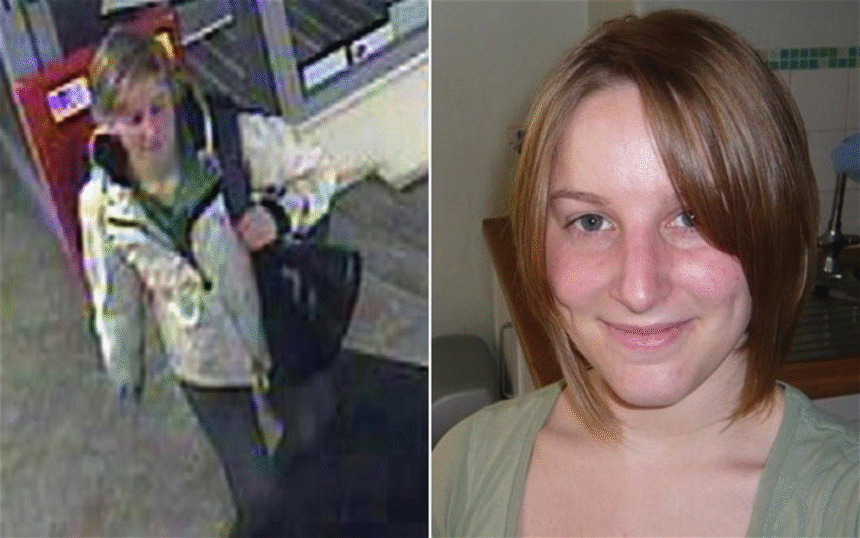
Joanna Yeates was a 25-year-old landscape architect living in Bristol. She went missing on 17 December 2010 and was later found murdered. The case became one of the biggest criminal investigations Britain had ever seen.
Yeates was born on 19 April 1985 in Hampshire, England, to David and Teresa Yeates. She studied landscape architecture and eventually earned a postgraduate diploma from the University of Gloucestershire.
In December 2008, she met architect Greg Reardon while both were working at a firm called Hyland Edgar Driver in Winchester. They started dating, moved in together in 2009, and later relocated to Bristol when their company moved there.
Yeates then changed jobs and began working at the Building Design Partnership in Bristol. In October 2010, the couple moved into a flat at 44 Canynge Road in the Clifton area of Bristol. The building had been split into several separate flats.
Their landlord, Christopher Jefferies, lived in another flat in the same building. A Dutch architectural engineer named Vincent Tabak lived in the flat right next to theirs with his girlfriend.
On the evening of 17 December 2010, Yeates went out with colleagues to the Bristol Ram pub on Park Street. Before leaving, she told friends she was not looking forward to the weekend alone since Reardon had gone to Sheffield.
She mentioned she planned to bake and do some Christmas shopping while he was away. She left the pub at around 8:00 pm to walk home, a journey that usually took about 30 minutes.
At around 8:10 pm, CCTV cameras caught her briefly entering a Waitrose supermarket, though she did not buy anything. At 8:30 pm, she called her closest friend, Rebecca Scott, to arrange plans for Christmas Eve.
Ten minutes later, at around 8:40 pm, she bought a pizza from a nearby Tesco Express and two small bottles of cider from a local off-licence called Bargain Booze. That was the last time she was seen alive.
Reardon returned home from Sheffield on the evening of 19 December and found Yeates missing. He had been trying to call and text her throughout the day with no response.
When he got back to the flat, he found her mobile phone ringing from inside the pocket of a coat she had left behind. Her purse and keys were also still there. One of the cider bottles was in the flat, partially drunk.
The cat appeared to have gone without food or attention. Just after midnight, Reardon called the police and Yeates’s parents to report her missing.
Investigators arrived and quickly noticed that there was no sign of a forced entry or any kind of struggle inside the flat. The pizza she had bought was nowhere to be found, and neither was its packaging.
These details made police think it was possible that whoever had come into the flat may have been someone Yeates already knew. A woman attending a party at a house nearby on Canynge Road remembered hearing two loud screams coming from the direction of Yeates’s flat shortly after 9:00 pm.
A neighbour living behind the building said he heard a woman cry out the words “Help me,” though he could not remember exactly when that happened.
On 21 December, Yeates’s parents and Reardon held a public press conference asking anyone with information to come forward. Another press conference followed on 23 December, broadcast live by Sky News and BBC News.
Her father, David Yeates, said he believed his daughter had been taken from her flat and expressed certainty that she would not have voluntarily left, given everything she had left behind.
At the same time, the family and Reardon’s friends set up a website and used social media to try to get more people involved in the search.
Rewards totalling £60,000 were offered for information that could help identify those responsible. Crime Stoppers contributed £10,000 and The Sun newspaper offered £50,000.
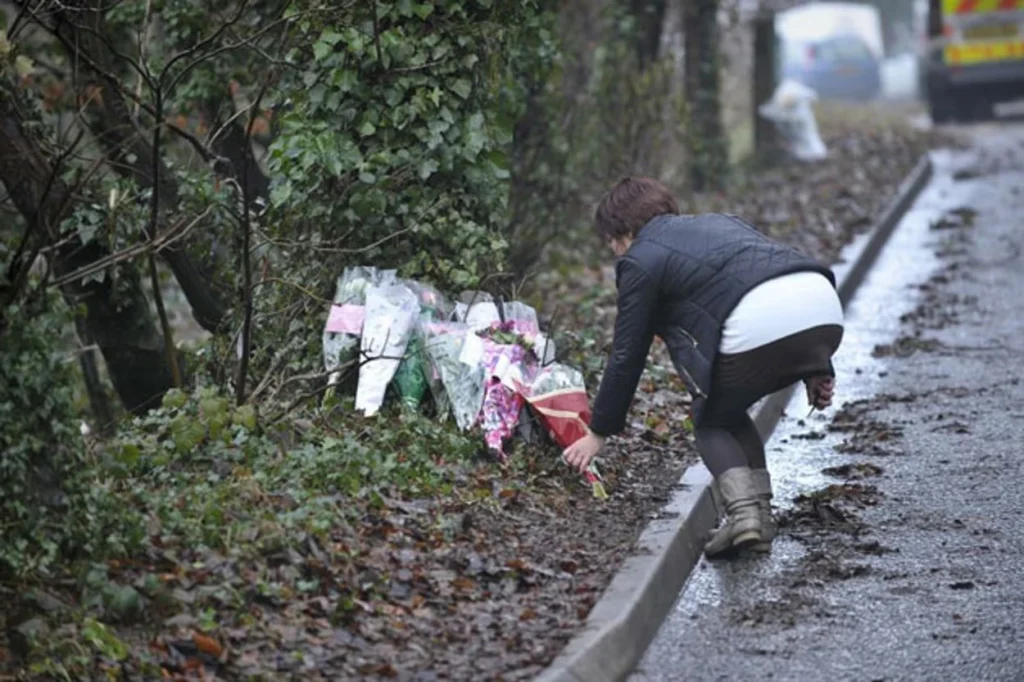
On Christmas Day, 25 December 2010, a couple walking their dogs along Longwood Lane in Failand, a village in North Somerset, found a fully clothed body lying in the snow near a golf course and a quarry entrance.
Failand was approximately three miles from Yeates’s home. Police confirmed the body was that of Joanna Yeates. Reardon and the Yeates family visited the site on 27 December.
Her father said the family had been told to prepare for the worst and expressed some relief that she had at least been found.
A post-mortem examination started on 26 December, but the results were delayed because the body had been frozen. At first, police thought she might have died from the cold since there were no immediately visible injuries.
However, on 28 December, the pathologist confirmed that Yeates had died from strangulation, and the case was officially declared a murder inquiry.
The examination also showed that she had died several days before being discovered and had not eaten the pizza she had purchased. There was no evidence that she had been sexually assaulted.
The investigation was named Operation Braid and was led by Detective Chief Inspector Phil Jones of Avon and Somerset Constabulary. A team of 70 detectives, uniformed officers, and civilian staff worked the case, making it one of the largest police operations the Constabulary had ever handled.
Officers reviewed more than 100 hours of surveillance footage and went through 293 tonnes of rubbish collected from the area around Yeates’s flat. On 4 January 2011, a forensic psychologist joined the investigation to help identify possible suspects.
Investigators also tracked the movements of several hundred registered sex offenders in the area to check their whereabouts on 17 December.
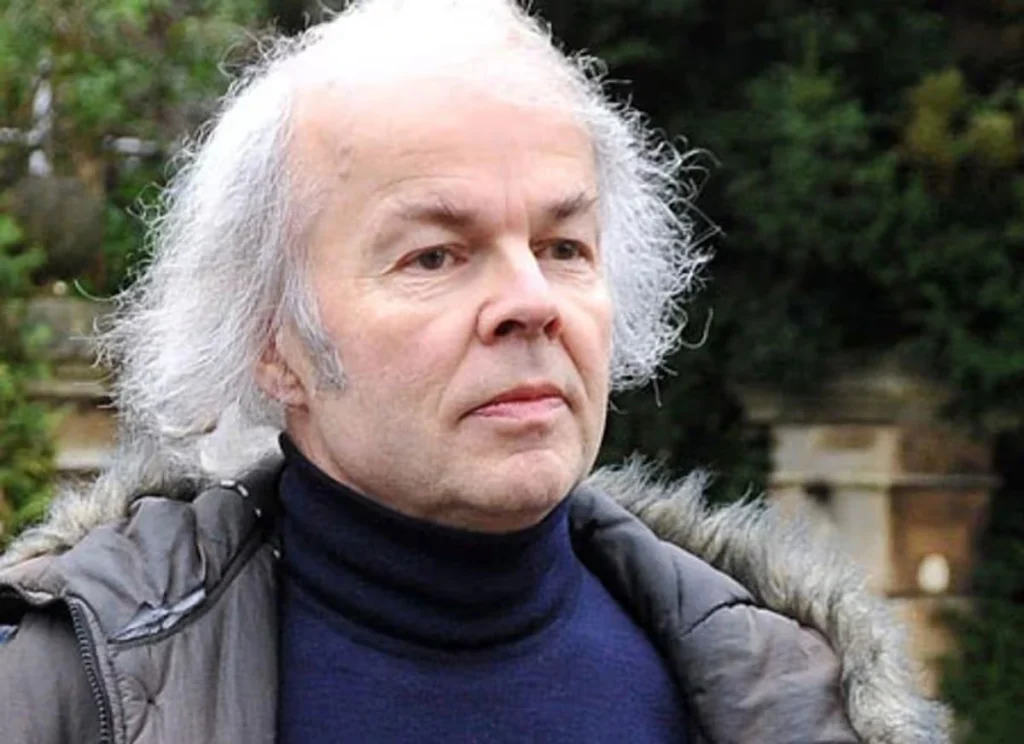
On 30 December 2010, police arrested Christopher Jefferies, the landlord who lived in the same building as Yeates, on suspicion of murder. His flat was searched by forensic teams while he was taken in for questioning.
Police were granted several extensions to hold him, up to a maximum of 96 hours, but he was released on bail after two days. On 4 March 2011, police confirmed that Jefferies was no longer a suspect and released him from bail entirely.
While Jefferies was still under investigation, the media coverage surrounding his arrest became deeply troubling. Newspapers published strongly worded articles that painted him in a very negative light, using language that implied guilt before any charge had been made.
Media commentator Roy Greenslade called it character assassination on a large scale. Jefferies later said the tabloid press had decided he was guilty and had set about convincing the public through stories that were completely untrue.
In January 2011, a reconstruction of Yeates’s last known movements was filmed in Bristol for the BBC programme Crimewatch. The filming took place on 18 January, and within 24 hours of news coverage about it, more than 300 people contacted police with information.
A key development came shortly after, when an anonymous female caller contacted police following a televised appeal by Yeates’s parents on Crimewatch. The tip pointed investigators toward Vincent Tabak, the man living in the flat directly next to Yeates and Reardon.
Tabak had actually been looked at and ruled out earlier in the investigation. He had recently returned to Britain after spending the New Year with his family in the Netherlands. On the morning of 20 January 2011, police arrested him.
He was 32 years old. Officers sealed off his flat and searched a nearby townhouse where he had been staying. The BBC cancelled its plans to air the Crimewatch reconstruction following his arrest.
DNA analysis carried out by a private forensic company called LGC Forensics produced a match between samples taken from Yeates’s body and Tabak. Analysts stated that the probability of the DNA not being a match was less than one in a billion.
Fibres also suggested contact between Yeates and Tabak’s coat and car. Blood stains were found on a wall near the quarry where her body had been discovered.
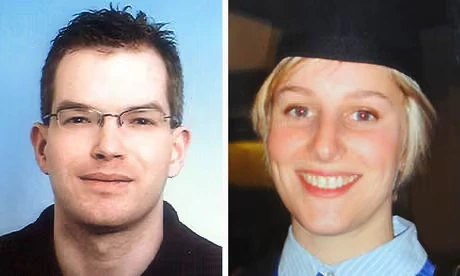
After 96 hours of questioning, Tabak was charged with the murder of Joanna Yeates on 22 January 2011. He appeared briefly at Bristol Magistrates’ Court on 24 January and was held in custody.
He was later moved from Bristol Prison for safety reasons and placed under suicide watch at Long Lartin Prison near Evesham. He initially denied responsibility, claiming the DNA evidence had been made up by corrupt officials.
However, on 8 February, he told a prison chaplain that he had killed Yeates and planned to plead guilty.
On 5 May 2011, Tabak pleaded guilty to manslaughter but denied murder. The Crown Prosecution Service refused to accept the manslaughter plea. His trial began on 4 October 2011 at Bristol Crown Court before Mr Justice Field.
The prosecution, led by Nigel Lickley QC, argued that Tabak had strangled Yeates within minutes of her arriving home on 17 December. They said he had used his height and build to overpower her, noting he was around a foot taller than Yeates.
She had suffered 43 separate injuries to her head, neck, torso, and arms, including cuts, bruises, and a fractured nose. The prosecution also presented evidence that in the days following her death, Tabak had made internet searches about how long it takes a body to decompose and when rubbish was collected in the Clifton area.
He had also attempted during the investigation to point suspicion toward Jefferies by contacting police and claiming Jefferies had been using his car on the night of 17 December.
A police officer was even sent to Amsterdam to speak to him, but grew suspicious when his account did not match a previous statement he had given.
In his defence, Tabak told the court that the killing was not sexually motivated. He claimed that Yeates had invited him in for a drink and had made a comment he interpreted as flirtatious.
He said that when he tried to kiss her and she screamed, he placed his hands over her mouth and around her neck to quiet her. He denied there had been a struggle and said he had only held her neck for around 20 seconds. He said that after moving her body, he was in a state of panic.
The jury began deliberating on 26 October. Two days later, on 28 October 2011, Tabak was found guilty of murder by a majority verdict of ten to two. Mr Justice Field sentenced him to life imprisonment with a minimum term of 20 years. The judge noted that there was a sexual element to the killing.
After the trial, it came out that indecent images of children had been found on Tabak’s laptop during the murder investigation. In December 2013, the Crown Prosecution Service announced he would face charges for possessing those images.
On 2 March 2015, Tabak pleaded guilty to possessing more than 100 such images and was sentenced to 10 months in prison, to run at the same time as his existing life sentence.
Back to the press coverage, Jefferies had already launched legal action against eight publications on 21 April 2011. On 29 July, he accepted substantial damages from all of them.
That same day, the court ruled that both The Sun and the Daily Mirror had been in contempt of court for their reporting during the time Jefferies was under arrest. The Daily Mirror was fined £50,000 and The Sun was fined £18,000.
Both newspapers appealed, but the Mirror’s appeal was rejected by the Supreme Court on 9 March 2012, and The Sun withdrew its own appeal.
Jefferies also gave evidence to the Leveson Inquiry, which had been set up to look into the behaviour and ethics of the British press.
He described how reporters had surrounded him after he was questioned by police and explained the immense personal cost the whole ordeal had on him. He also criticised government plans to change legal aid rules, saying they would stop people with less money from being able to take newspapers to court.
A memorial service for Yeates was held at Christ Church in Clifton on 2 January 2011. Her funeral took place on 11 February at St Mark’s Church near Ampfield in Hampshire, attended by approximately 300 people.
Her friends and family planted a memorial garden in her honour at the Sir Harold Hillier Gardens in Romsey. Plans were also made for a memorial in a hospital garden she had been designing in Bristol before her death.
Reardon set up a charity website in her memory to raise funds for families of missing people. Yeates left behind an estate valued at £47,000, which her parents inherited since she had not written a will.
In 2013, ITV commissioned a two-part drama about Jefferies’s experience during the investigation. Titled The Lost Honour of Christopher Jefferies, it starred Jason Watkins and aired on 10 and 11 December 2014. Jefferies had read and approved the script beforehand.
In May 2015, the drama won two awards at the British Academy Television Awards, including best mini-series and best actor for Watkins.

Recent Comments